


When it comes to high - quality knives, Damascus Point Knives stand out in the cutlery world. As a well - established supplier of Damascus Point Knives, I've had the privilege of delving deep into the unique edges these knives possess. In this blog, I'll explore the various types of edges and what makes them special.
The Razor - Sharp Edge
One of the most notable features of a Damascus Point Knife is its razor - sharp edge. The secret lies in the Damascus steel used to forge the blade. Damascus steel is created through a process of folding and layering different types of steel. This results in a blade with a fine grain structure, which can be honed to an incredibly sharp edge.
The razor - sharp edge of a Damascus Point Knife makes it ideal for precision cutting tasks. Whether you're slicing through paper - thin slices of meat in the kitchen or performing delicate carving work, this edge allows for clean and accurate cuts. The thinness of the edge also means less resistance when cutting through materials, reducing the amount of force required. For example, a Damascus Blade Cliff Cypress Wood Handle knife with its razor - sharp edge can effortlessly slice through vegetables, leaving smooth and even cuts.
The Serrated Edge
Some Damascus Point Knives come with a serrated edge. A serrated edge consists of a series of small teeth along the blade. This type of edge is particularly useful for cutting through tough or fibrous materials. When cutting through items like ropes, cardboard, or crusty bread, the serrated edge bites into the material, providing better grip and allowing for more efficient cutting.
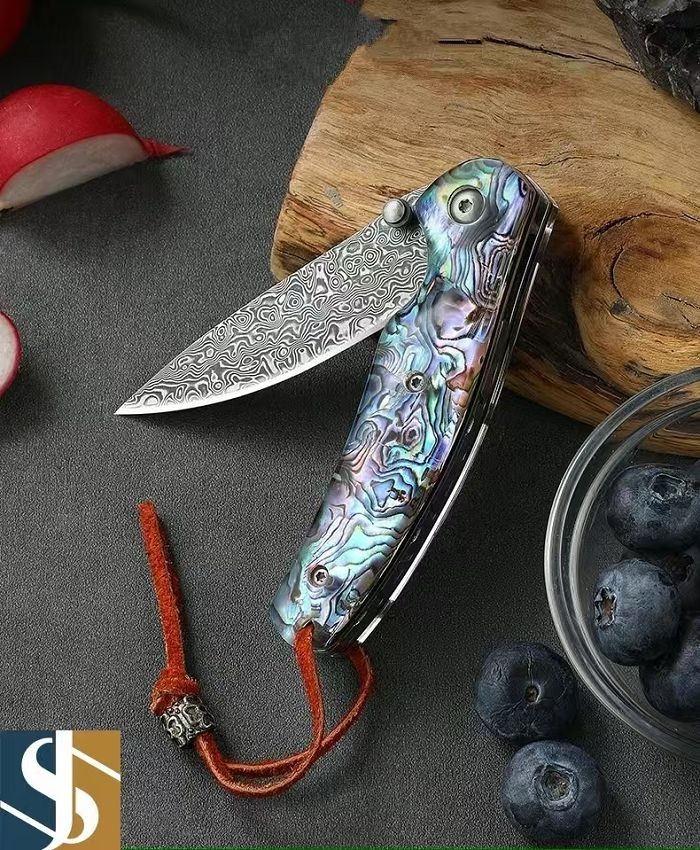
The serrated edge on a Damascus Point Knife is also self - sharpening to some extent. As the knife cuts through materials, the edges of the teeth are constantly being refreshed. However, it's important to note that maintaining a serrated edge requires special sharpening tools. Our Damascus Pocket Knife with Abalone Shell Handle is an excellent example of a knife with a serrated edge that offers great functionality for outdoor and everyday use.

The Combo Edge
A combo edge is a combination of a straight edge and a serrated edge on the same blade. This type of edge offers the best of both worlds. The straight edge can be used for precision cutting tasks, such as slicing or chopping, while the serrated edge can handle tougher materials.
For instance, if you're out camping, a Damascus Point Knife with a combo edge can be used to fillet a fish with the straight edge and then cut through a tent rope with the serrated edge. This versatility makes the combo - edged Damascus Point Knife a popular choice among outdoor enthusiasts, hunters, and survivalists. The Damascus Steel Ghost Blade is a prime example of a knife with a combo edge that provides users with a wide range of cutting capabilities.
Edge Retention
Another important aspect of the edge of a Damascus Point Knife is its edge retention. Edge retention refers to how long the edge of the knife remains sharp during use. Due to the high - quality Damascus steel and the forging process, Damascus Point Knives generally have excellent edge retention.
The layered structure of Damascus steel distributes the stress evenly across the blade, preventing the edge from dulling quickly. This means that users can rely on their Damascus Point Knives for extended periods without having to constantly sharpen the blade. Whether you're using the knife for daily kitchen tasks or in a more demanding outdoor environment, the good edge retention of a Damascus Point Knife ensures consistent performance.
Corrosion Resistance
In addition to their sharpness and edge retention, the edges of Damascus Point Knives also have good corrosion resistance. The Damascus steel used in these knives often contains elements such as chromium, which helps to protect the blade from rust and corrosion.
This is especially important for knives that are used in wet or humid environments. For example, if you're fishing and your knife comes into contact with saltwater, a Damascus Point Knife with good corrosion resistance will be less likely to develop rust spots on its edge. This not only maintains the appearance of the knife but also ensures that the edge remains in good condition for optimal cutting performance.
Aesthetic Appeal of the Edge
Beyond functionality, the edge of a Damascus Point Knife also has significant aesthetic appeal. The unique patterns created by the layering of different steels in Damascus steel are visible along the edge of the blade. These patterns, often referred to as "waterfall" or "wave" patterns, give each knife a one - of - a - kind look.
The aesthetic appeal of the edge makes Damascus Point Knives not only useful tools but also beautiful collectibles. Many knife enthusiasts appreciate the artistry and craftsmanship that goes into creating a Damascus Point Knife, and the edge is an integral part of its overall allure.
Conclusion
In conclusion, the edges of Damascus Point Knives offer a wide range of benefits, from razor - sharp precision to the ability to handle tough materials. Whether you need a knife for the kitchen, outdoor activities, or as a collectible, there's a Damascus Point Knife with an edge that suits your needs.
If you're interested in purchasing high - quality Damascus Point Knives or have any questions about our products, I encourage you to reach out for a procurement discussion. We're here to provide you with the best knives and the information you need to make an informed decision.
References
- "The Art of Knife Making" by David Boye
- "Knife Engineering and Design" by Ernest Emerson