


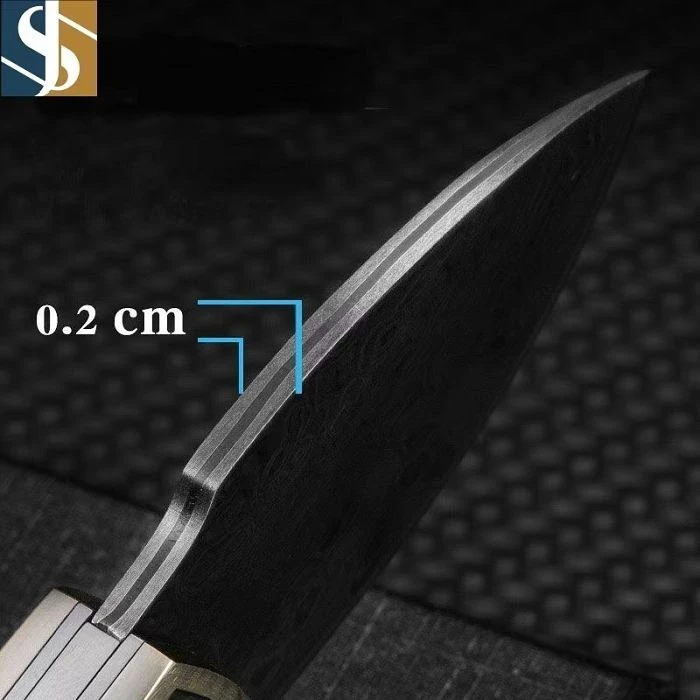
The cutting edge angle of a knife plays a pivotal role in determining its performance, durability, and suitability for various tasks. When it comes to a Damascus Point Knife, understanding the cutting edge angle is crucial for both enthusiasts and professionals. As a supplier of high - quality Damascus Point Knives, I am excited to delve into this topic and share some insights.
What is the Cutting Edge Angle?
The cutting edge angle refers to the angle formed by the two sides of the blade at the cutting edge. It is typically measured in degrees and can vary significantly depending on the intended use of the knife. A smaller cutting edge angle means a sharper blade, as it presents a thinner edge to the material being cut. However, a very small angle may also make the blade more prone to chipping and dulling quickly. On the other hand, a larger cutting edge angle provides more durability and resistance to damage but sacrifices some sharpness.
Ideal Cutting Edge Angles for Damascus Point Knives
Damascus Point Knives are known for their versatility, often used in activities such as hunting, camping, and general utility work. For these types of applications, the ideal cutting edge angle usually falls within a certain range.
- General Utility Use: For day - to - day tasks like opening packages, cutting ropes, or slicing fruits, a cutting edge angle between 15 and 20 degrees per side (30 - 40 degrees total) is commonly preferred. This angle offers a good balance between sharpness and durability. The blade can easily cut through soft materials while still being able to withstand some abuse.
- Hunting and Skinning: When it comes to hunting and skinning animals, a slightly sharper edge is often desired. A cutting edge angle of around 12 - 15 degrees per side (24 - 30 degrees total) allows for precise cuts and easy penetration through the skin and flesh. However, it's important to note that this sharper edge requires more careful handling and may need more frequent sharpening.
- Heavy - Duty Tasks: For heavy - duty tasks such as chopping wood or cutting through tough materials, a larger cutting edge angle is recommended. An angle of 20 - 25 degrees per side (40 - 50 degrees total) provides more strength and resistance to chipping. The blade can handle the force exerted during these tasks without easily getting damaged.
Factors Affecting the Cutting Edge Angle
Several factors can influence the choice of cutting edge angle for a Damascus Point Knife.
- Blade Material: The quality and composition of the Damascus steel used in the knife play a significant role. High - quality Damascus steel with excellent edge - holding properties can maintain a sharper edge for longer periods. This allows for the use of a smaller cutting edge angle without sacrificing too much durability.
- Heat Treatment: Proper heat treatment is essential for achieving the desired hardness and toughness of the blade. A well - heat - treated Damascus blade can better withstand the stresses associated with different cutting edge angles. If the heat treatment is not done correctly, the blade may be too brittle or too soft, affecting its performance.
- User Preference: Ultimately, the user's preference also matters. Some people prefer a very sharp blade for precision work, while others prioritize durability and are willing to sacrifice some sharpness. Our customers often have different needs, and we strive to offer a range of Damascus Point Knives with varying cutting edge angles to meet those diverse requirements.
Our Range of Damascus Point Knives
As a supplier, we offer a wide variety of Damascus Point Knives to suit different needs.
- Damascus Wooden Handle Folding Knife: This folding knife is perfect for general utility use. It has a cutting edge angle of around 18 degrees per side (36 degrees total), providing a good balance between sharpness and durability. The wooden handle adds a touch of elegance and comfort to the grip.
- Rose Wood Handle Knife Damascus: Ideal for hunting and outdoor activities, this knife features a slightly sharper cutting edge angle of 13 degrees per side (26 degrees total). The rosewood handle not only looks beautiful but also offers a secure and comfortable hold.
- Mini Damascus Beef Bone Handle Folding Knife: This mini folding knife is great for everyday carry. It has a cutting edge angle of 15 degrees per side (30 degrees total), making it sharp enough for various small tasks. The beef bone handle gives it a unique and rustic look.
Importance of Maintaining the Cutting Edge Angle
Once you have chosen the right Damascus Point Knife with the appropriate cutting edge angle, it's important to maintain it properly. Regular sharpening is essential to keep the blade in optimal condition. When sharpening, it's crucial to maintain the original cutting edge angle. Using a sharpening guide or a professional sharpening service can help ensure that the angle is consistent.

Contact Us for Purchasing
If you are interested in our Damascus Point Knives, we invite you to contact us for purchasing and further discussions. Whether you are a professional hunter, an outdoor enthusiast, or simply looking for a high - quality utility knife, we have the right product for you. We are committed to providing the best quality knives and excellent customer service. Feel free to reach out to us to start the procurement negotiation process.
References
- "The Complete Guide to Knife Making" by Jeff Bartlett
- "Knife Engineering" by Larrin Thomas
- Various industry reports on knife performance and design.