


Is Damascus steel blade good for slicing?
As a supplier of Damascus steel blades, I've received numerous inquiries regarding the slicing capabilities of these remarkable blades. In this blog post, I'll delve into the properties of Damascus steel and explore whether it truly excels at slicing tasks.
Understanding Damascus Steel
Damascus steel has a rich history dating back centuries. Originally crafted in the Middle East, it was renowned for its distinctive wavy patterns and exceptional strength. The traditional process of making Damascus steel involved repeatedly folding and forging layers of high - carbon and low - carbon steels together. This process not only created the beautiful visual pattern but also imparted unique mechanical properties to the blade.
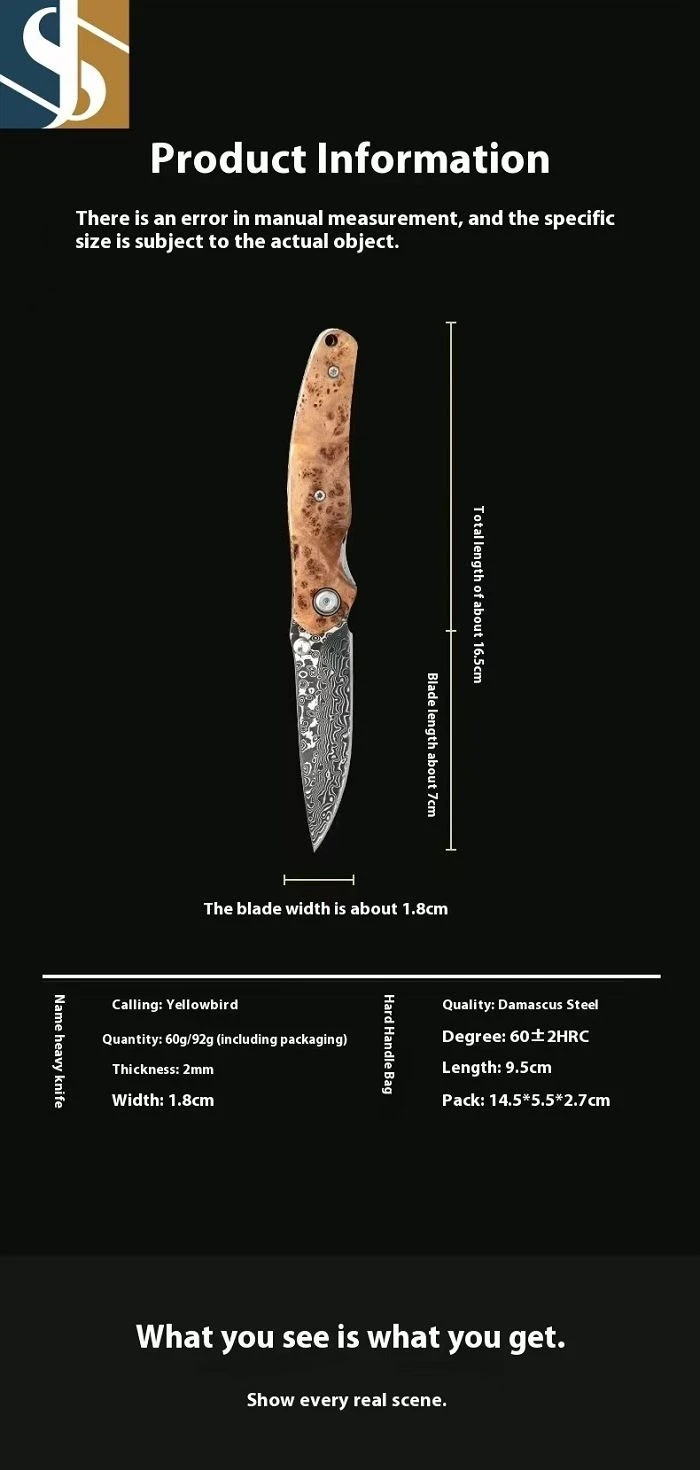

Modern Damascus steel can be made through different methods. One common approach is pattern - welded steel, where multiple layers of steel are forge - welded together and then etched to reveal the pattern. Another method involves using powdered metals and advanced manufacturing techniques.
Key Properties of Damascus Steel for Slicing
Sharpness
One of the most important factors for slicing is the ability to achieve and maintain a sharp edge. Damascus steel has the potential to hold an extremely sharp edge. The combination of different steels in its layered structure allows for a fine and precise grind. The high - carbon steel layers contribute to the cutting ability, while the low - carbon steel layers provide a degree of toughness to support the edge. When properly heat - treated and sharpened, a Damascus steel blade can slice through various materials with ease. For example, it can smoothly cut through vegetables, fruits, and even thin sheets of meat.
Toughness
Toughness is crucial to prevent the blade from chipping or breaking during slicing. The layered structure of Damascus steel acts as a natural shock absorber. When the blade encounters resistance while slicing, the different layers can deform slightly without catastrophic failure. This is in contrast to some single - alloy steels that may be more brittle. For instance, when slicing through fibrous materials like thick ropes or tough wood, a Damascus steel blade is less likely to suffer edge damage compared to a less - tough blade.
Corrosion Resistance
While slicing, a blade may come into contact with moisture, acids (such as those in fruits and vegetables), and other corrosive substances. Damascus steel can have good corrosion resistance, especially when it contains elements like chromium. A well - made Damascus blade with proper surface treatments, such as passivation, can resist rust and corrosion, ensuring that the blade remains in good condition over time. This means that the blade will continue to slice effectively without being degraded by corrosion.
Slicing Different Materials
Food Items
When it comes to slicing food, Damascus steel blades shine. Their sharpness allows for clean cuts, which is essential for presenting food neatly. For example, when slicing a ripe tomato, a Damascus steel blade can cut through the skin without squashing the soft interior. It can also make thin, uniform slices of cheese, enhancing the aesthetic appeal of a cheese platter. The smooth slicing action reduces the effort required, making food preparation a more enjoyable experience.
Textiles and Leather
In the realm of slicing textiles and leather, Damascus steel blades are also a great choice. Their sharp edge can cut through fabric without fraying the edges, which is important for tailoring and crafting. When working with leather, the blade can make precise cuts for leatherworking projects, such as making wallets or belts. The toughness of the blade ensures that it can handle the resistance of these materials without losing its cutting ability.
Wood and Other Hard Materials
Although not typically used for heavy - duty woodworking, a Damascus steel blade can still be used for light slicing of wood, such as cutting thin veneers or making small notches. Its sharpness and toughness allow for controlled cuts. However, it's important to note that for more demanding wood - cutting tasks, specialized woodworking blades may be more appropriate.
Our Damascus Steel Blade Products
We offer a variety of Damascus steel blades suitable for slicing. Our Damascus Mini Samurai Sword is a great option for those who want a unique and functional slicing tool. With its traditional samurai - style design and high - quality Damascus steel blade, it can be used for both decorative purposes and practical slicing tasks.
The Damascus Bamboo Handle Tanto Knife is another excellent choice. The bamboo handle provides a comfortable grip, and the Damascus blade is perfect for slicing through a range of materials, from food to light - duty craft materials.
Our Damascus Blade Cliff Cypress Wood Handle combines the beauty of cliff cypress wood with the performance of a Damascus steel blade. The handle offers a natural and ergonomic feel, while the blade can deliver precise slicing results.
Conclusion
In conclusion, Damascus steel blades are indeed very good for slicing. Their combination of sharpness, toughness, and corrosion resistance makes them suitable for a wide range of slicing applications, from food preparation to light - duty crafting. Whether you're a professional chef, a hobbyist, or someone who simply appreciates a high - quality blade, a Damascus steel blade can be a valuable addition to your toolkit.
If you're interested in purchasing our Damascus steel blades for slicing or other purposes, we invite you to contact us for procurement and negotiation. We can provide more detailed information about our products, including specifications, pricing, and customization options.
References
- Smith, J. (2018). The Art of Blade Making. New York: Blade Press.
- Johnson, R. (2019). Steel Alloys and Their Applications. London: Metal Publishing.
- Thompson, A. (2020). Slicing Techniques and Blade Performance. Tokyo: Cutting Edge Books.