


Hey there! As a supplier of Damascus steel knives, I often get asked about how these amazing blades are heat-treated. It's a crucial process that really makes a difference in the quality and performance of the knife. So, let's dive right in and explore the ins and outs of heat-treating Damascus steel knives.
What is Damascus Steel?
First off, let's quickly go over what Damascus steel is. Damascus steel is known for its distinctive wavy pattern on the blade, which is not just for show. It's created through a process of folding and forging different types of steel together. This results in a blade that combines the best properties of each steel, like hardness and toughness.
The Heat-Treating Process
Heat-treating Damascus steel knives is a multi-step process that requires a lot of skill and precision. Here's a breakdown of the main steps:
1. Heating the Blade
The first step is to heat the blade to a specific temperature. This temperature depends on the type of steel used in the Damascus blade. Generally, the blade is heated to around 1,500°F to 1,600°F (815°C to 870°C). This high temperature allows the steel to reach a state where its internal structure can be changed.
2. Quenching
Once the blade reaches the right temperature, it's quickly cooled down, or quenched. Quenching is a critical step because it determines the hardness of the blade. The blade is usually quenched in a liquid, like oil or water. Oil is a popular choice because it cools the blade more slowly than water, which helps prevent cracking.
3. Tempering
After quenching, the blade is very hard but also brittle. To make it more durable and less likely to break, it needs to be tempered. Tempering involves heating the blade to a lower temperature, usually around 300°F to 500°F (150°C to 260°C), and holding it there for a certain period of time. This process relieves the internal stresses in the blade and makes it more flexible.
4. Normalizing (Optional)
Some heat-treating processes also include a step called normalizing. Normalizing involves heating the blade to a high temperature and then allowing it to cool in still air. This helps to refine the grain structure of the steel and improve its overall quality.
Why Heat-Treating Matters
Heat-treating is essential for Damascus steel knives because it affects their performance in several ways:
- Hardness: A properly heat-treated blade will be hard enough to hold a sharp edge for a long time. This means you won't have to sharpen your knife as often.
- Toughness: Heat-treating also makes the blade more tough and resistant to chipping or breaking. This is important, especially if you use your knife for heavy-duty tasks.
- Edge Retention: A well-heat-treated blade will maintain its sharpness even after repeated use. This is crucial for tasks that require precision cutting.
Our Damascus Steel Knives
At our company, we take great pride in producing high-quality Damascus steel knives. We use a carefully controlled heat-treating process to ensure that each blade meets our strict standards.
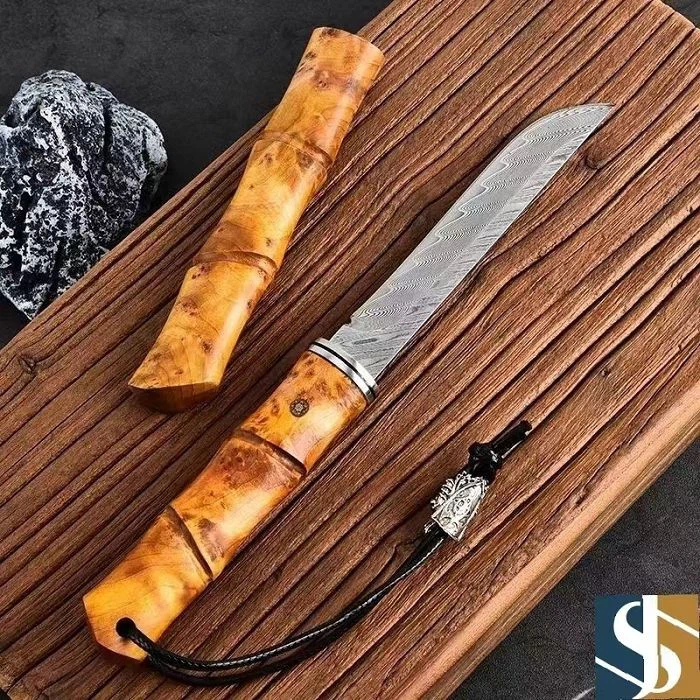

Check out some of our popular Damascus steel knives:
- Damascus Pocket Knife with Abalone Shell Handle: This pocket knife features a beautiful abalone shell handle and a sharp Damascus steel blade. It's perfect for everyday carry.
- Mini Damascus Tanto Knife: The mini tanto knife is a compact and versatile blade. Its unique tanto tip makes it great for piercing and cutting.
- Damascus Bamboo Handle Tanto Knife: This tanto knife has a stylish bamboo handle and a high-quality Damascus steel blade. It's a great choice for collectors and knife enthusiasts.
Contact Us for Purchasing
If you're interested in purchasing our Damascus steel knives or have any questions about our products, feel free to reach out to us. We're always happy to help and look forward to doing business with you. Whether you're a professional chef, an outdoor enthusiast, or just someone who appreciates a well-made knife, our Damascus steel knives are sure to meet your needs.
References
- ASM Handbook Volume 4: Heat Treating. ASM International.
- Steel Heat Treatment: Metallurgy and Technologies. By L. Torben Hansen and D. Scott MacKenzie.
That's all for now. I hope this blog post has given you a better understanding of how Damascus steel knives are heat-treated. If you have any more questions, don't hesitate to ask.