


Hey there, outdoor enthusiasts! As an outdoor axe supplier, I often get asked about what materials outdoor axes are usually made of. Well, let's dive right into it and explore the different materials that go into making these essential tools for the great outdoors.
1. Steel
Steel is hands - down the most common material for the blade of an outdoor axe. It's a no - brainer because of its strength and durability. There are different types of steel used, and each has its own pros and cons.
Carbon Steel
Carbon steel is a classic choice. It's known for its high carbon content, which gives it excellent edge retention. That means your axe can keep a sharp edge for a long time, making it great for chopping wood. However, carbon steel is prone to rust. If you leave it out in the rain or don't dry it properly after use, it'll start to develop that pesky orange rust. But hey, with a bit of care, like applying a thin coat of oil after each use, you can keep your carbon steel axe in tip - top shape.
Many traditional axes are made from carbon steel because of its ability to be sharpened to a very fine edge. For those who love the old - school feel and are willing to put in the maintenance, carbon steel is a top pick.
Stainless Steel
Stainless steel is another popular option. It's resistant to rust, which is a huge plus for outdoor tools. You don't have to worry as much about leaving it out in the elements or getting it wet. But stainless steel doesn't hold an edge as well as carbon steel. It might need to be sharpened more often, but the convenience of not having to deal with rust can make up for that.
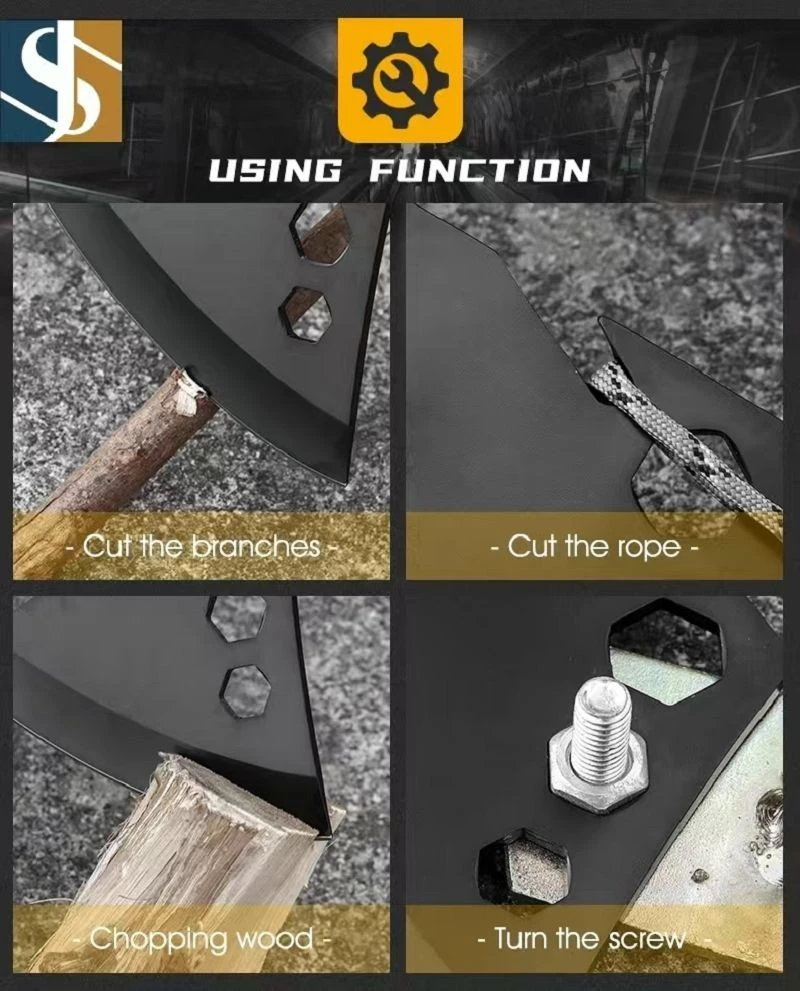
If you're someone who's always on the go and doesn't have a lot of time for tool maintenance, a stainless - steel axe could be the way to go. Our All Black Multi-functional Axe Rubber Handle features a high - quality stainless - steel blade, offering the perfect balance of rust resistance and cutting performance.
2. Handles
The handle of an outdoor axe is just as important as the blade. It's what connects you to the tool and allows you to use it effectively. There are several materials used for axe handles.
Hickory
Hickory is a traditional wood for axe handles. It's strong, flexible, and can absorb shock well. When you're swinging an axe, there's a lot of force involved, and hickory can handle that force without breaking easily. It also has a nice natural look, giving your axe a rustic charm.

However, hickory is a natural material, so it can be affected by moisture. If it gets too wet, it might swell or even rot over time. But with proper treatment, like sealing it with a good wood finish, you can extend the life of a hickory handle.
Fiberglass
Fiberglass handles are becoming more and more popular. They're lightweight, which makes them easy to carry around. And they're extremely durable. They won't break like a wooden handle might if you accidentally hit something hard. Fiberglass handles are also resistant to moisture, so you don't have to worry about them getting damaged by rain or humidity.
Our Mini Tomahawk Machete Axe comes with a high - quality fiberglass handle, providing a comfortable and reliable grip for all your outdoor adventures.
Rubber
Rubber handles are great for grip. They offer a non - slip surface, which is crucial when your hands might be wet or sweaty. Rubber can also absorb some of the shock from swinging the axe, reducing the strain on your hands and arms.
Some axes combine rubber with other materials, like a rubber coating on a fiberglass or wooden handle. This gives you the best of both worlds - the strength of the base material and the added grip of the rubber.
3. Other Materials
There are a few other materials that might be used in the construction of outdoor axes, although they're not as common.
Titanium
Titanium is a very lightweight and strong material. Axes made with titanium blades are easy to carry around, which is great for long - distance hikes or backpacking trips. Titanium is also resistant to corrosion, so it can stand up to the elements. However, titanium is more expensive than steel, so titanium axes tend to be pricier.
Aluminum
Aluminum is another lightweight material. It's often used in the construction of the axe head or parts of the handle. Aluminum is corrosion - resistant and relatively inexpensive. But it's not as strong as steel or titanium, so it might not be suitable for heavy - duty chopping.
Why Choose Our Axes?
At our supply business, we understand the importance of using high - quality materials. We carefully select the steel for our blades, whether it's carbon steel for that perfect edge or stainless steel for rust resistance. Our handles are made from the best hickory, fiberglass, or rubber to ensure a comfortable and reliable grip.
We offer a wide range of outdoor axes to suit different needs. Whether you're a professional logger, a weekend camper, or just someone who likes to have a good tool around the house, we've got an axe for you. Our All Black Multi-functional Axe Rubber Handle is a great all - around tool, while the Mini Tomahawk Machete Axe is perfect for those who need a compact and portable option.
Let's Do Business
If you're interested in purchasing our outdoor axes, whether it's for personal use or for your business, we'd love to talk to you. We can offer competitive prices and great customer service. Just reach out to us to start the procurement negotiation process. We're ready to help you find the perfect axes for your needs.
References
- "The Complete Guide to Axes" by Outdoor Tool Experts
- "Materials for Outdoor Tools" - Journal of Outdoor Equipment Research