


The history of hunting knives is a rich tapestry woven through the annals of human civilization, reflecting our evolution, technological advancements, and deep - seated connection with the natural world. As a hunting knives supplier, I've had the privilege of delving into this history, and I'm excited to share it with you.
Prehistoric Origins
The story of hunting knives begins in prehistoric times. Our early ancestors, the hunter - gatherers, needed tools to survive. They fashioned rudimentary cutting implements from materials readily available in their environment, such as sharpened stones, animal bones, and wooden sticks. These primitive tools were the predecessors of the modern hunting knife.

Stone knives were among the first tools created. Our ancestors chipped and flaked stones like flint to create a sharp edge. These simple yet effective tools were used for skinning animals, cutting meat, and preparing hides. They were essential for survival in a world where hunting was the primary means of obtaining food. The art of making stone tools, known as lithic technology, was passed down through generations, with each improvement making the tools more efficient.
Ancient Civilizations
As human civilization advanced, so did the design and functionality of hunting knives. In ancient Egypt, knives were crafted from bronze, a significant improvement over stone. Bronze was stronger and more durable, allowing for more precise cutting. Egyptian hunting knives often had beautifully decorated handles made from materials like ivory or wood, and they were not only tools but also symbols of status.
In ancient Greece and Rome, iron became the material of choice for knife - making. Iron knives were even stronger than bronze ones, and they could hold a sharper edge. These knives were used not only for hunting but also in warfare. The Roman pugio, a short stabbing knife, was carried by soldiers and could also be used for hunting small game when needed.
The Middle Ages
During the Middle Ages in Europe, the art of knife - making reached new heights. Blacksmiths became highly skilled craftsmen, creating knives with intricate designs and superior quality. Hunting knives were often personalized, with handles made from materials like bone, antler, or precious metals. The blades were forged using techniques that involved folding and hammering the metal to create a strong and flexible edge.
One of the most famous types of hunting knives from this period was the rondel dagger. It had a circular or oval - shaped handle and a double - edged blade. While it was primarily a weapon, it was also used for hunting and was often carried by knights and nobles.
The Age of Exploration
The Age of Exploration in the 15th to 17th centuries brought about significant changes in the world of hunting knives. European explorers traveled to new lands, encountering different cultures and materials. They brought back new ideas and techniques for knife - making.
In the Americas, Native American tribes had their own unique styles of hunting knives. These knives were often made from materials like obsidian, a volcanic glass that could be sharpened to an incredibly fine edge. European settlers in the Americas adopted some of these Native American knife - making techniques and combined them with their own, leading to the development of new types of hunting knives.
The Industrial Revolution
The Industrial Revolution in the 18th and 19th centuries transformed the production of hunting knives. Mass - production techniques were introduced, making knives more affordable and accessible to a wider range of people. Factories replaced individual blacksmiths in many cases, and the quality of knives became more standardized.
During this time, new materials like stainless steel were developed. Stainless steel was resistant to rust and corrosion, making it an ideal material for hunting knives. It allowed for the creation of knives that could be used in wet and harsh environments without losing their edge.
Modern Hunting Knives
Today, hunting knives come in a wide variety of styles and designs to suit different hunting needs. There are fixed - blade knives, which are sturdy and reliable, and folding knives, which are more portable.
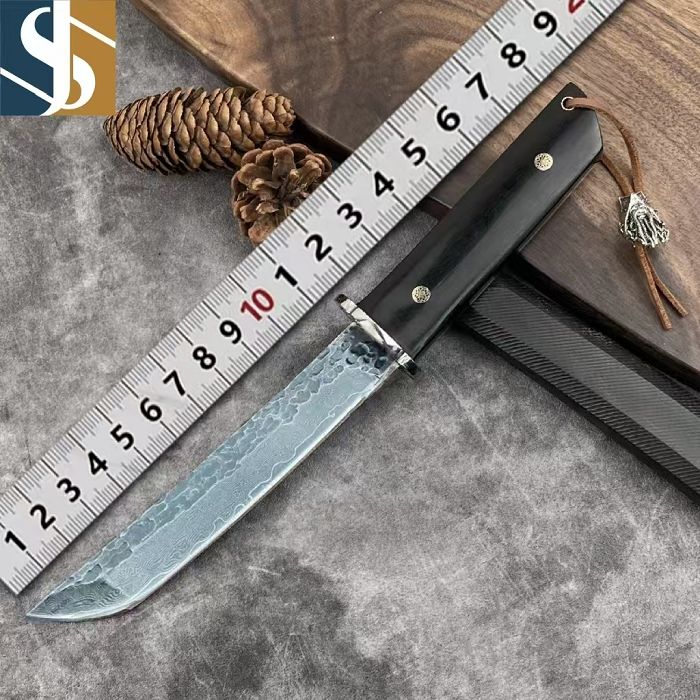
As a hunting knives supplier, we offer a range of high - quality hunting knives. For example, our Damascus Wooden Handle Folding Knife combines the beauty of a wooden handle with the strength of a Damascus steel blade. Damascus steel is known for its unique pattern and excellent cutting performance.
Our Damascus Pocket Knife is a compact and convenient option for hunters on the go. It can easily fit in a pocket or a hunting pack, and it's perfect for small tasks like cutting ropes or opening packages in the field.
Another outstanding product in our collection is the Damascus Steel Ghost Blade. This knife has a unique blade design that gives it a ghostly appearance, and it's made from high - quality Damascus steel for superior cutting power.
The Future of Hunting Knives
Looking to the future, we can expect to see continued innovation in hunting knife design. New materials and technologies will be developed, making knives even more efficient and durable. There will also be a growing focus on sustainability, with more knives being made from recycled or environmentally friendly materials.
As a hunting knives supplier, we are committed to staying at the forefront of these developments. We work closely with our customers to understand their needs and preferences, and we strive to offer the best possible products.
If you're interested in purchasing high - quality hunting knives, we invite you to contact us for a procurement discussion. We have a wide range of products to choose from, and our team of experts can help you find the perfect knife for your hunting needs.
References
- "A History of Knives" by David A. Hardy
- "The Art of Knife - Making" by John J. Nelson
- "Hunting Knives Through the Ages" by Robert E. Simpson