


Hey there! As a supplier of Damascus Antlers Handles, I often get asked about the density of these unique handles. So, let's dive right in and explore what the density of a Damascus Antlers Handle actually is.
First off, it's important to understand what Damascus Antlers Handles are. These handles are crafted from antlers, which are a natural and durable material. The term "Damascus" here might refer to a pattern or finish on the handle, similar to the famous Damascus steel pattern. Antlers have been used for centuries in knife - making and other crafts due to their strength and aesthetic appeal.
The density of an antler can vary depending on several factors. One of the main factors is the type of animal the antler comes from. Different species of deer, elk, or moose have antlers with different densities. For example, elk antlers tend to be denser than some deer antlers. On average, the density of antlers ranges from about 0.9 g/cm³ to 1.2 g/cm³. This is relatively dense compared to some other common materials used for knife handles, like wood.
The density of a Damascus Antlers Handle is also influenced by the part of the antler that is used. The base of the antler, closer to where it attaches to the animal's skull, is usually denser than the tips. This is because the base has more compact bone structure and less porous areas. When we select the antler for our Damascus Antlers Handles, we carefully choose the parts that offer the best combination of density, strength, and appearance.
Why does the density matter? Well, a higher - density antler handle is generally more durable. It can withstand more wear and tear, which is crucial for a knife handle that will be used regularly. A denser handle is also less likely to crack or chip. In addition, the density can affect the feel of the knife in your hand. A heavier, denser handle can provide a more substantial grip, which some users prefer, especially for larger knives.
Let's talk a bit about how we make our Damascus Antlers Handles. We start by sourcing high - quality antlers from sustainable and legal sources. Then, we clean and prepare the antlers to remove any debris or impurities. Next, we shape the antlers into the desired handle design. This involves cutting, sanding, and polishing the antler to create a smooth and comfortable grip.
After shaping, we apply the Damascus - style finish. This can be done through various techniques, such as etching or heat - treating, to create the distinctive pattern. The finish not only adds to the visual appeal of the handle but also helps protect the antler from moisture and other environmental factors.
Now, I'd like to introduce some of the products that feature our Damascus Antlers Handles. We have the Mini Damascus Tanto Knife. This knife has a sleek and compact design, making it perfect for everyday carry. The Damascus Antlers Handle adds a touch of elegance and durability to this already great knife.
Another great option is the Damascus Pocket Knife. This pocket knife is versatile and handy for a variety of tasks. The antler handle provides a comfortable and secure grip, and the Damascus pattern makes it stand out from the crowd.
We also offer the Mini Damascus Beef Bone Handle Folding Knife. While this one has a beef bone handle, we also have versions with our Damascus Antlers Handles. The folding design makes it easy to carry and store, and the antler handle gives it a unique and rustic look.
If you're in the market for high - quality knives with Damascus Antlers Handles, we'd love to hear from you. Whether you're a collector, an outdoor enthusiast, or a professional who needs a reliable knife, our products are designed to meet your needs. We can provide different quantities to suit your requirements, whether you're looking for a single knife or a bulk order for your business.
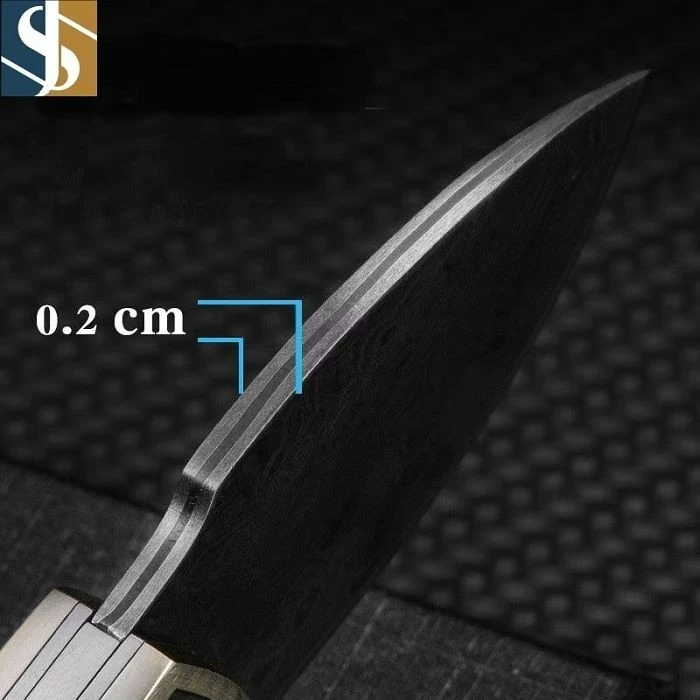

So, if you're interested in purchasing our Damascus Antlers Handle knives or just want to learn more, don't hesitate to reach out. We're here to answer any questions you might have and to help you find the perfect knife for you.
References
- "Antler as a Material for Knife Handles" - Journal of Traditional Craft Materials
- "The Science of Antler Density" - Wildlife Biology Research Journal