


Hey there, knife enthusiasts! I'm a supplier of Damascus Point Knives, and today I'm gonna dive deep into a question that often pops up: What is the blade thickness of a Damascus Point Knife?
First off, let's understand what a Damascus Point Knife is. These knives are known for their unique and beautiful patterns, which are created through a special forging process. The Damascus steel used in these knives isn't just for show; it also offers excellent durability and sharpness.
Now, when it comes to blade thickness, there's no one - size - fits - all answer. The thickness of a Damascus Point Knife blade can vary depending on several factors.
Factors Affecting Blade Thickness
1. Knife's Purpose
The intended use of the knife plays a huge role in determining its blade thickness. If a Damascus Point Knife is designed for delicate tasks like carving intricate details in wood or whittling small pieces, a thinner blade is usually preferred. A blade thickness in the range of 1.5mm to 2.5mm can provide the necessary flexibility and precision for these types of tasks. For example, a Damascus Shell Handle Small Folding Knife which is often used for light - duty tasks like opening packages or small cutting jobs around the house, might have a relatively thin blade.
On the other hand, if the knife is meant for heavy - duty tasks such as chopping through thick branches or butchering large animals, a thicker blade is required. Blades with a thickness of 3mm to 5mm or even more can handle the stress and force associated with these tough jobs. The Mini Damascus Beef Bone Handle Folding Knife can be used for a variety of tasks, and if it's intended for more rugged use, it will likely have a thicker blade.
2. Blade Length
The length of the blade also has an impact on its thickness. Generally, longer blades need to be thicker to maintain their strength and stability. A short Damascus Point Knife with a blade length of around 2 to 3 inches might have a thinner blade, perhaps around 2mm. But as the blade length increases to 6 inches or more, the thickness will usually increase as well. This is because a longer blade is more prone to bending or breaking under pressure, and a thicker blade can better withstand these forces. The Damascus Steel Ghost Blade, depending on its length, will have an appropriate blade thickness to ensure its functionality.
3. Design and Style
Different designs and styles of Damascus Point Knives can call for different blade thicknesses. Some knives have a more traditional or classic design, while others are more modern and streamlined. Traditional designs might have a slightly thicker blade as they are often based on historical models that were built for durability. Modern designs, on the other hand, might be engineered to have a thinner blade while still maintaining strength through advanced materials and construction techniques.
Common Blade Thickness Ranges
In the world of Damascus Point Knives, we can generally classify the blade thickness into a few common ranges:
1. Ultra - thin Blades (less than 2mm)
These blades are extremely sharp and flexible. They are ideal for tasks that require high precision, such as filigree work in leather or fine wood carving. However, they are not suitable for heavy - duty use as they can easily break or chip under excessive force.
2. Thin Blades (2mm - 3mm)
This is a popular range for many everyday carry (EDC) Damascus Point Knives. Knives in this range offer a good balance between sharpness and durability. They can handle a variety of tasks, from cutting ropes to slicing fruits.
3. Medium - thick Blades (3mm - 4mm)
Blades in this range are more robust and can handle tougher tasks. They are often used for camping, hunting, and general outdoor work. They can chop through small branches and handle some light batoning (using the knife to split wood).
4. Thick Blades (4mm and above)
These blades are built for heavy - duty applications. They are strong enough to handle significant force, such as chopping through thick logs or butchering large game.
Measuring Blade Thickness
Measuring the blade thickness of a Damascus Point Knife is relatively straightforward. You can use a caliper, which is a precision measuring tool. Place the caliper jaws on the thickest part of the blade, usually near the base where it meets the handle. Make sure to measure at a right angle to the blade surface for an accurate reading.
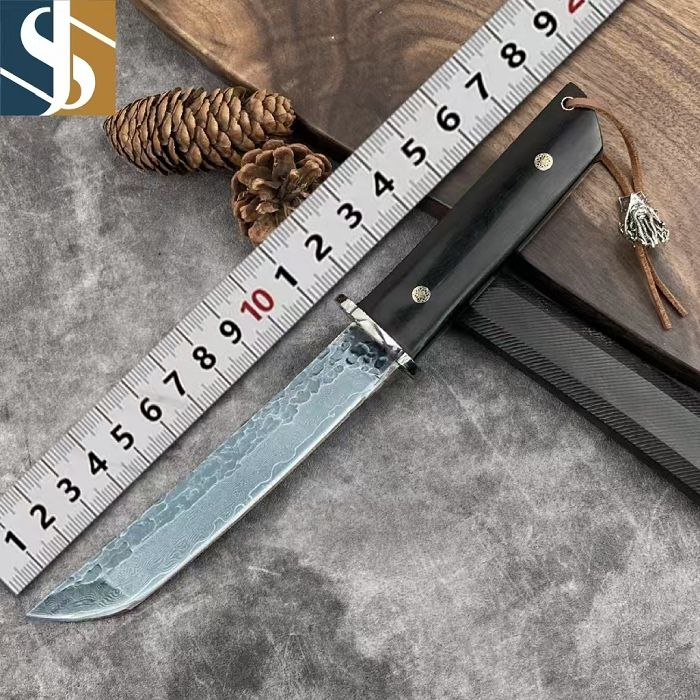

It's important to note that the blade thickness can also vary along the length of the blade. The tip of the blade is usually thinner than the base to provide sharpness and precision, while the base needs to be thicker to support the blade and withstand the forces applied during use.
Why Blade Thickness Matters
The blade thickness of a Damascus Point Knife has a direct impact on its performance. A thicker blade will be more durable and better able to handle heavy - duty tasks, but it might be less sharp and more difficult to use for delicate work. A thinner blade, on the other hand, will be extremely sharp and precise, but it might not be able to withstand as much force.
When choosing a Damascus Point Knife, it's essential to consider your specific needs and the tasks you'll be using the knife for. If you're a hobbyist who enjoys wood carving, a thinner blade might be the best choice. But if you're an outdoorsman who needs a knife for survival situations, a thicker blade would be more appropriate.
Our Product Range
As a supplier of Damascus Point Knives, we offer a wide range of knives with different blade thicknesses to meet the diverse needs of our customers. Whether you're looking for a delicate EDC knife or a heavy - duty outdoor tool, we've got you covered. Our Damascus Shell Handle Small Folding Knife is perfect for everyday use, with a blade thickness that provides a good balance of sharpness and durability. The Mini Damascus Beef Bone Handle Folding Knife is a great option for those who need a more rugged knife for outdoor adventures. And the Damascus Steel Ghost Blade offers a unique combination of style and performance.
Get in Touch
If you're interested in purchasing our Damascus Point Knives or have any questions about blade thickness or our product range, don't hesitate to reach out. We're always happy to help you find the perfect knife for your needs. Whether you're a retailer looking to stock our products or an individual buyer, we're ready to start a conversation. Let's talk about how we can meet your knife - buying requirements and ensure you get a high - quality Damascus Point Knife that you'll be satisfied with.
References
- "The Art of Knife Making" by Tom Begley
- "Knife Encyclopedia" by Joseph G. Swearingen
- Various industry reports on knife manufacturing and design