


Yo, what's up everyone! As a supplier of utility knives, I've been getting a ton of questions lately about the blade's resistance to wear. So, I thought I'd take a deep dive into this topic and share some insights with you all.
First off, let's talk about what wear resistance actually means. In simple terms, it's how well a knife blade can withstand the abrasion, friction, and impact it encounters during normal use. A knife with high wear resistance will stay sharp longer, maintain its edge better, and overall, last a whole lot longer than one with poor wear resistance.
There are a few key factors that affect a utility knife blade's wear resistance. The first and most obvious is the type of steel used. Different steels have different compositions, and these compositions can greatly impact how well the blade holds up over time. For example, high-carbon steels are known for their excellent edge retention and wear resistance. They contain a higher percentage of carbon, which makes the steel harder and more durable. On the other hand, stainless steels, while they offer good corrosion resistance, may not have the same level of wear resistance as high-carbon steels.
Another important factor is the heat treatment process. This is where the magic really happens. Heat treatment involves heating the steel to a specific temperature and then cooling it at a controlled rate. This process can change the structure of the steel, making it harder and more resistant to wear. A well-heat-treated blade will have a fine-grained structure that can better withstand the forces of cutting and slicing.
The blade's geometry also plays a role in its wear resistance. A blade with a thinner edge may be sharper initially, but it may also wear down more quickly. On the other hand, a blade with a thicker edge may be more durable but may not be as sharp. Finding the right balance between edge sharpness and durability is crucial.
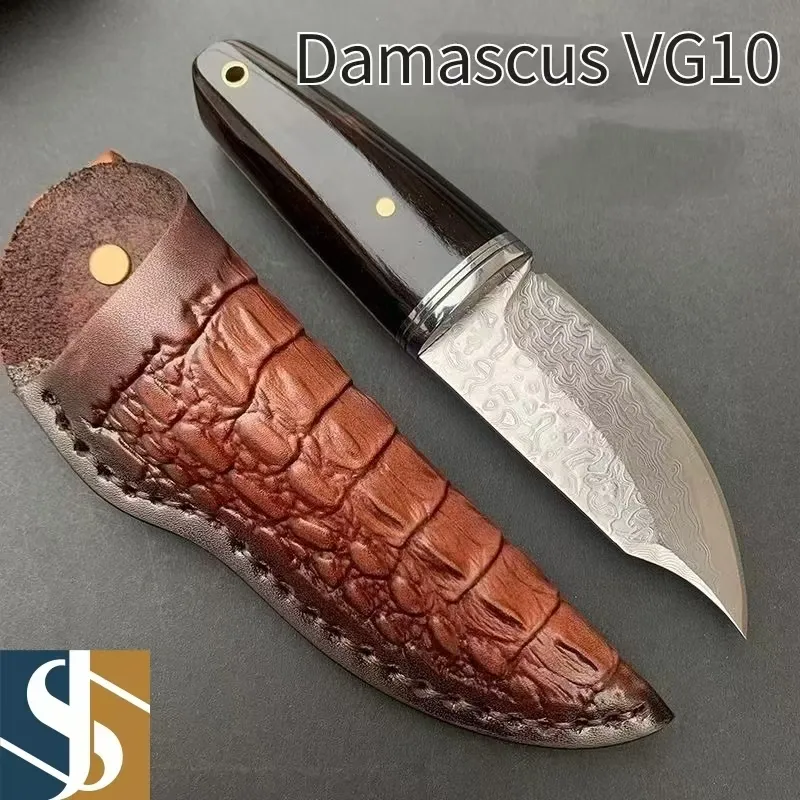
Now, let's take a look at some of the utility knives we offer and how they stack up in terms of wear resistance. One of our popular models is the Damascus Point Knife. This knife features a Damascus steel blade, which is known for its unique pattern and excellent wear resistance. Damascus steel is made by folding and forging multiple layers of steel together, creating a strong and durable blade. The layers also help to distribute the forces of cutting, reducing the wear on the blade.
Another great option is the Damascus Steel Ghost Blade. This knife has a sleek and modern design, and its Damascus steel blade offers exceptional wear resistance. The blade is also heat-treated to ensure maximum hardness and durability. Whether you're using it for everyday tasks or more heavy-duty work, this knife is sure to hold up well.
If you're looking for a more compact option, our Damascus Shell Handle Small Folding Knife is a great choice. Despite its small size, this knife has a powerful Damascus steel blade that can handle a variety of tasks. The shell handle provides a comfortable and secure grip, making it easy to use for extended periods of time.
So, how can you test the wear resistance of a utility knife? Well, one way is to simply use it. Try cutting through different materials, such as cardboard, wood, and plastic, and see how well the blade holds up. You can also look for signs of wear, such as dulling of the edge or chipping of the blade. Another option is to use a wear test machine, which can simulate the conditions of normal use and provide more accurate results.
In conclusion, the blade's resistance to wear is an important factor to consider when choosing a utility knife. By understanding the factors that affect wear resistance and choosing a knife made from high-quality materials and with proper heat treatment, you can ensure that your knife will last for a long time. If you're in the market for a new utility knife, be sure to check out our selection of Damascus Point Knife, Damascus Steel Ghost Blade, and Damascus Shell Handle Small Folding Knife.

If you have any questions or are interested in purchasing our utility knives, feel free to reach out to us. We're always happy to help and look forward to discussing your needs and getting you the perfect knife for your tasks.
References:
- "Knife Steel Nerds: Understanding Knife Steel." Knife Steel Nerds.
- "The Complete Guide to Knife Making." By Jeff Bartlett.