


Hey there, fellow outdoor enthusiasts! As a supplier of outdoor tanto knives, I've seen my fair share of blades out there in the market. And let me tell you, not all tanto knives are created equal. There are some real gems, but unfortunately, there are also plenty of low - quality ones. In this blog, I'll be sharing the signs that you're dealing with a low - quality outdoor tanto knife.
1. Poor Blade Material
One of the first things to look at is the blade material. A low - quality tanto knife often uses subpar steel. For example, if the knife claims to be made of stainless steel but it starts to rust after just a few uses, that's a big red flag. Good quality stainless steel should have a high chromium content, which helps resist corrosion.
Some low - end knives might use cheap carbon steel that's prone to rapid oxidation. You'll notice a dull, brownish - red discoloration on the blade, and it might even start to pit over time. This not only affects the knife's appearance but also its functionality. A corroded blade is weaker and can break more easily when you're using it for tough tasks in the outdoors.
On the other hand, high - quality tanto knives are usually made from premium steels like VG - 10, S30V, or D2. These steels offer a great balance of hardness, edge retention, and corrosion resistance. So, if a knife doesn't mention the type of steel it's made from or uses a generic term like "steel," be wary.
2. Blunt or Uneven Edge
A sharp edge is crucial for any outdoor knife, and a tanto knife is no exception. A low - quality tanto knife will often come with a blunt edge straight out of the box. You might think that you can just sharpen it yourself, but if the blade is made of poor - quality steel, it'll be difficult to get a sharp and long - lasting edge.
Another sign is an uneven edge. When you look closely at the blade, you might notice that the edge isn't straight or that there are small chips or nicks in it. This can make the knife less effective for cutting tasks. For instance, if you're trying to slice through a rope or cut branches, a blunt or uneven edge will make the job much harder and less precise.
In contrast, a high - quality tanto knife will have a razor - sharp and even edge. You can easily cut through various materials with minimal effort. If you're in doubt, ask the seller if you can test the knife's edge before buying.
3. Loose or Wobbly Handle
The handle of a tanto knife is just as important as the blade. A low - quality knife often has a loose or wobbly handle. This can be due to poor construction or the use of cheap materials. When you hold the knife, you should feel a solid and secure grip. If the handle moves around or makes a rattling sound when you shake the knife, it's a sign of a problem.
A loose handle can be dangerous, especially when you're using the knife for heavy - duty tasks. It can cause the blade to shift unexpectedly, increasing the risk of injury. High - quality tanto knives use proper construction techniques, such as full - tang construction, where the blade extends all the way through the handle. This provides a strong and stable connection between the blade and the handle.
Some low - end knives might use plastic or cheap wood for the handle, which can easily break or wear out over time. Look for knives with handles made from durable materials like G10, Micarta, or high - quality hardwoods.
4. Inconsistent Blade Geometry
The geometry of a tanto blade is designed for specific tasks, such as piercing and slicing. A low - quality tanto knife might have inconsistent blade geometry. For example, the point of the blade might be too thick or too dull, making it less effective for piercing. Or the blade might have an irregular shape, which can affect its balance and handling.
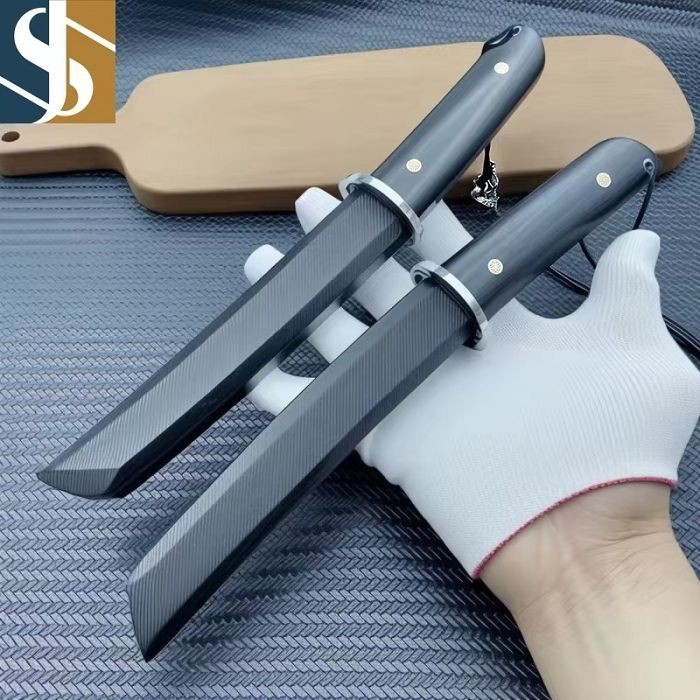

In a well - made tanto knife, the blade geometry is carefully designed and precise. The point is sharp and strong, allowing you to easily pierce through materials like cardboard, leather, or even thin metal. The blade also has a proper shape for slicing, with a smooth curve that helps you cut through objects efficiently.
If you're considering buying a tanto knife, take a close look at the blade's shape and dimensions. Compare it to other high - quality tanto knives to see if it meets the standards.
5. Weak or Flimsy Construction
The overall construction of the knife is a key indicator of its quality. A low - quality tanto knife might have weak rivets or screws that hold the handle together. You might notice that the rivets are loose or that the screws are easy to turn. This can lead to the handle coming apart over time, which is a major safety hazard.
The blade might also be poorly attached to the handle. If you try to wiggle the blade, and it moves more than a tiny bit, that's a sign of a weak connection. High - quality knives are built to last, with strong and secure construction methods.
Another aspect of construction is the finish of the knife. A low - quality knife might have a rough or uneven finish. The blade might have scratches or blemishes, and the handle might not be sanded or polished properly. A good finish not only looks better but also protects the knife from corrosion and wear.
6. Lack of Balance
Balance is crucial for a knife, especially when you're using it for extended periods in the outdoors. A low - quality tanto knife might be front - heavy or back - heavy, making it difficult to control. If the knife is front - heavy, it can be tiring to hold and use for tasks like slicing. On the other hand, a back - heavy knife might not have enough weight in the blade to perform well for piercing or chopping.
A well - balanced tanto knife will feel comfortable in your hand and allow you to perform tasks with ease. You should be able to hold the knife and make smooth, controlled cuts without having to fight against the knife's weight.
Our High - Quality Options
At our supply, we're committed to providing high - quality outdoor tanto knives. For example, check out our Damascus Pocket Knife with Abalone Shell Handle. It's made from premium Damascus steel, which offers excellent edge retention and a beautiful pattern. The abalone shell handle not only looks great but also provides a comfortable and secure grip.
Another great option is our Damascus Bamboo Handle Tanto Knife. The bamboo handle is durable and gives the knife a natural and unique look. The Damascus steel blade is sharp and strong, perfect for all your outdoor needs.
And if you're looking for something a bit more unique, our Damascus Steel Ghost Blade is a great choice. It has a sleek and modern design, and the Damascus steel construction ensures top - notch performance.
Contact Us for Procurement
If you're interested in purchasing high - quality outdoor tanto knives for your business or personal use, we'd love to hear from you. We offer competitive prices, excellent customer service, and fast shipping. Whether you're a retailer looking to stock up on knives or an individual in need of a reliable outdoor blade, we can help. Reach out to us, and let's start a great business relationship!
References
- "Knife Engineering: A Complete Guide to Knives and Their Design" by Custom Knife Maker's Guild
- "The Knife Book: A Complete Guide to Knives and Their Uses" by Bernard Levine