


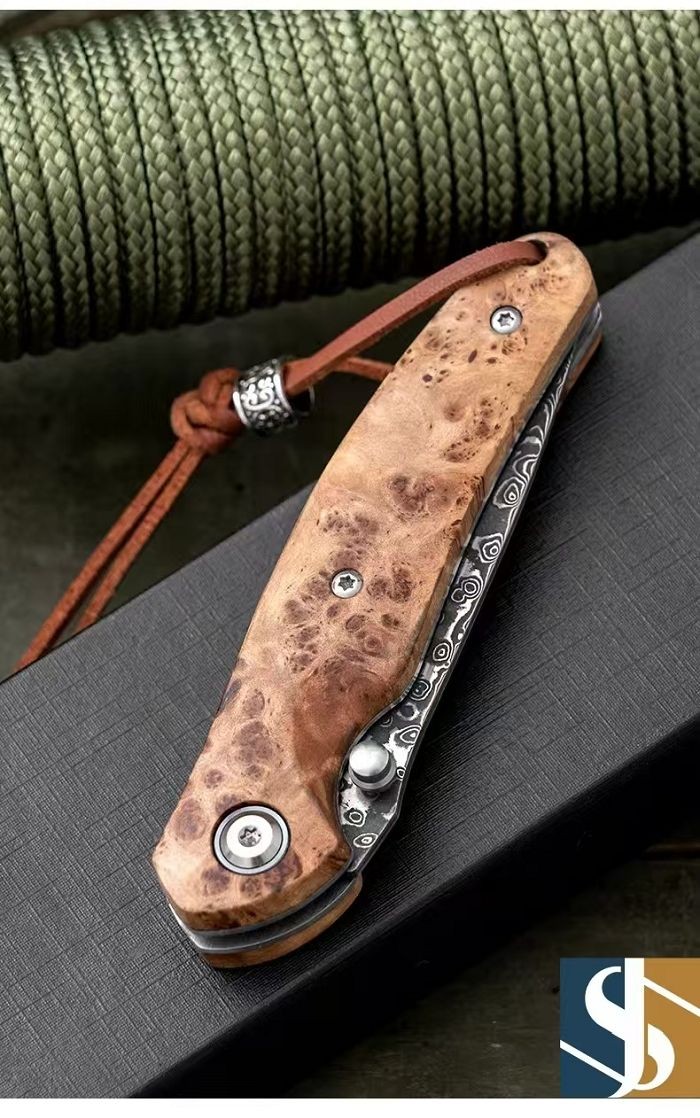
As a supplier of high-quality knives, I've had the privilege of introducing a wide range of exquisite blades to customers around the world. Our collection includes remarkable pieces like the Damascus Shell Handle Small Folding Knife, the Damascus Blade Cliff Cypress Wood Handle, and the Rose Wood Handle Knife Damascus. These knives are crafted with precision, using top-notch materials and advanced techniques. However, it's important to acknowledge that even high-quality knives come with certain disadvantages. In this blog, I'll delve into some of these drawbacks to provide a balanced view for potential buyers.
High Cost
One of the most obvious disadvantages of high-quality knives is their steep price tag. The production of these knives involves meticulous craftsmanship, the use of premium materials, and often, years of expertise. For instance, the Damascus steel used in many of our high-end knives is known for its unique pattern and exceptional sharpness. But the process of forging Damascus steel is labor-intensive and requires specialized skills. Additionally, the handles made from rare woods like cliff cypress or rosewood add to the cost. These materials are not only expensive to source but also require careful selection and treatment to ensure durability and aesthetic appeal.
The high cost can be a significant deterrent for budget-conscious consumers. They may find it difficult to justify spending a large amount of money on a single knife, especially when there are more affordable alternatives available in the market. Moreover, if a high-quality knife is lost, stolen, or damaged beyond repair, the financial loss can be substantial.
Maintenance Requirements
High-quality knives demand regular and proper maintenance to keep them in optimal condition. Unlike cheaper knives that can often be neglected for a while without significant consequences, our premium knives need consistent care. For example, the blades of our Damascus knives are prone to rust if not dried thoroughly after use. Even a small amount of moisture left on the blade can lead to corrosion over time, which can affect the knife's performance and appearance.
Sharpening is another crucial aspect of maintenance. High-quality knives are designed to hold a sharp edge for a long time, but eventually, they will need to be sharpened. However, sharpening these knives requires skill and the right tools. Using the wrong sharpening method or equipment can damage the blade and reduce its lifespan. Some customers may not have the time or expertise to perform proper maintenance, which can lead to a decline in the knife's quality.
Legal Restrictions
In many regions, there are strict laws and regulations regarding the possession and use of high-quality knives. Some types of knives, such as switchblades or automatic knives, are prohibited in certain areas. Even non-prohibited knives may be subject to restrictions on where they can be carried. For example, bringing a large, high-quality knife into a public building or a school may be illegal.
These legal restrictions can limit the practicality of owning a high-quality knife. Customers may be hesitant to purchase a knife if they are unsure about the legal implications. Additionally, the process of complying with these regulations can be complex and time-consuming, which can further discourage potential buyers.
Safety Concerns
The sharpness of high-quality knives is both a blessing and a curse. While it allows for precise cutting and efficient performance, it also poses a significant safety risk. A single slip of the hand can result in a serious cut or injury. The blades of our premium knives are so sharp that they can easily penetrate skin, and the wounds can be deep and difficult to treat.
Moreover, high-quality knives are often more durable and stronger than cheaper knives. This means that if they are used in an improper or dangerous way, the consequences can be more severe. For example, if a high-quality knife is used in a fight or as a weapon, the potential for harm is much greater. This safety concern can be a major factor for some customers, especially those with children or in households where there is a risk of accidental injury.
Limited Versatility
Despite their high quality, some high-quality knives are designed for specific tasks. For example, a chef's knife is optimized for cutting, slicing, and dicing in the kitchen, while a hunting knife is designed for tasks such as skinning and field dressing. While these knives excel at their intended purposes, they may not be suitable for other types of tasks.
This limited versatility can be a drawback for customers who are looking for a single knife that can handle a variety of jobs. They may need to purchase multiple high-quality knives to meet their different needs, which can further increase the cost.
Environmental Impact
The production of high-quality knives can have a significant environmental impact. The sourcing of materials, such as rare woods and metals, can contribute to deforestation and mining activities that harm the environment. The manufacturing process also consumes energy and resources, and the waste generated during production can be a concern.
As consumers become more environmentally conscious, they may be less likely to purchase high-quality knives due to these environmental concerns. They may prefer to choose more sustainable alternatives, such as knives made from recycled materials or those with a lower environmental footprint.

Aesthetic Preferences
While many people appreciate the beauty and craftsmanship of high-quality knives, there are others who may not be attracted to their aesthetic. The unique patterns and designs of Damascus steel, for example, may not appeal to everyone's taste. Some customers may prefer a more simple and minimalist look, and the elaborate patterns on our high-end knives may seem too flashy or ostentatious to them.
The handles made from rare woods also have a distinct look that may not be to everyone's liking. The natural variations in the wood grain and color can make each knife unique, but this can also be a drawback for customers who prefer a more uniform appearance.
Conclusion
Despite the numerous disadvantages, high-quality knives still offer many benefits, such as superior performance, durability, and aesthetic appeal. At our company, we understand that each customer has different needs and preferences, and we strive to provide the best knives that meet their requirements.
If you're considering purchasing a high-quality knife, it's important to weigh the pros and cons carefully. Think about your budget, your ability to maintain the knife, and the legal and safety implications. If you have any questions or need more information, please don't hesitate to contact us. We're here to help you make an informed decision and find the perfect knife for your needs. Whether you're a professional chef, an outdoor enthusiast, or simply someone who appreciates fine craftsmanship, we have a wide range of high-quality knives to choose from. Contact us today to start the procurement negotiation process and find the knife that's right for you.
References
- "Knife Laws in the United States." Legal Information Institute, Cornell Law School.
- "Maintenance Tips for High-Quality Knives." Professional Chef Magazine.
- "The Environmental Impact of Knife Manufacturing." Journal of Sustainable Manufacturing.