


Is it possible to sharpen a very dull kitchen cutting knife? This is a question that has been debated among chefs, home cooks, and knife enthusiasts for years. As a supplier of high-quality kitchen cutting knives, I often encounter customers who are frustrated with their dull blades and are looking for a solution. In this blog post, I will explore the possibility of sharpening a very dull kitchen cutting knife, and provide some tips and techniques to help you get the most out of your blades.
First, it's important to understand why a knife becomes dull in the first place. Over time, the edge of a knife will naturally wear down as it comes into contact with hard surfaces during cutting. The more you use your knife, the faster this wear will occur. Factors such as the type of food you cut (hard or soft), the cutting surface (wood, plastic, or ceramic), and the frequency of use all play a role in dulling the blade.
Another factor that can contribute to a dull knife is improper storage. Storing knives in a drawer with other utensils can cause the blades to rub against each other, leading to nicks and dents that dull the edge. Using a knife block or blade guard is a better option to protect the edges of your knives.
Now, let's address the main question: Is it possible to sharpen a very dull kitchen cutting knife? The answer is yes, but it requires some patience, the right tools, and the proper technique. There are several methods for sharpening a knife, each with its own advantages and disadvantages.

One of the most common methods for sharpening a dull knife is using a whetstone. Whetstones come in different grits, with coarser grits used for fixing damaged or very dull blades, and finer grits for honing and polishing the edge. To sharpen a knife with a whetstone, first soak the stone in water for about 10 - 15 minutes. Then, hold the blade at a 20 - degree angle against the stone and move the blade across the stone in a sweeping motion, applying light pressure. Repeat this process on the other side of the blade. It may take several passes on each side to achieve a sharp edge, especially if the knife is extremely dull.
Another option for sharpening a dull kitchen knife is using a knife sharpener. There are two main types of knife sharpeners: manual and electric. Manual sharpeners are typically less expensive and offer more control over the sharpening process. They usually have multiple slots with different grits, allowing you to start with a coarse grit to reshape the edge and then move to a finer grit for a polished finish. Electric knife sharpeners are faster and require less skill, but they may not provide as much precision as a manual sharpener.
Some modern electric sharpeners have adjustable settings to accommodate different types of blades, making them a versatile choice for sharpening very dull knives. For instance, if you have a Damascus Steel Ghost Blade, which has a unique blade design, a good electric sharpener with adjustable angles and settings can help restore its sharpness effectively.
Honing is another important aspect related to blade maintenance. It is different from sharpening. Honing is done regularly using a honing steel to realign the microscopic teeth on the blade's edge. While a honing steel won't actually sharpen a very dull knife, it can keep a relatively sharp knife in good condition between sharpenings. To use a honing steel, hold the steel vertically on a stable surface, place the heel of the knife blade at the top of the steel at a 20 - degree angle, and then draw the blade down the steel in a smooth motion until you reach the tip. Repeat this process on the other side of the blade.
When dealing with a very dull kitchen knife, it's also important to consider the blade material. Different blade materials, such as stainless steel, carbon steel, and Damascus steel, require slightly different approaches to sharpening. Damascus steel knives, for example, have a layered structure that can offer a combination of strength and sharpness. When sharpening a Damascus steel blade, be careful not to over - grind the layers, as this can affect the blade's appearance and performance.
In some cases, if the blade is severely damaged or has a large chip, it may be necessary to take the knife to a professional knife sharpener. Professional sharpeners have specialized equipment and expertise to handle difficult sharpening jobs. They can assess the damage to the blade and determine the best method for restoring its sharpness.
As a kitchen cutting knife supplier, I understand the importance of having sharp knives in the kitchen. A sharp knife not only makes food preparation easier and more efficient but also reduces the risk of accidents. Dull knives require more force to cut through food, which can lead to slipping and injuries. That's why I recommend investing in high - quality knives and maintaining them properly.
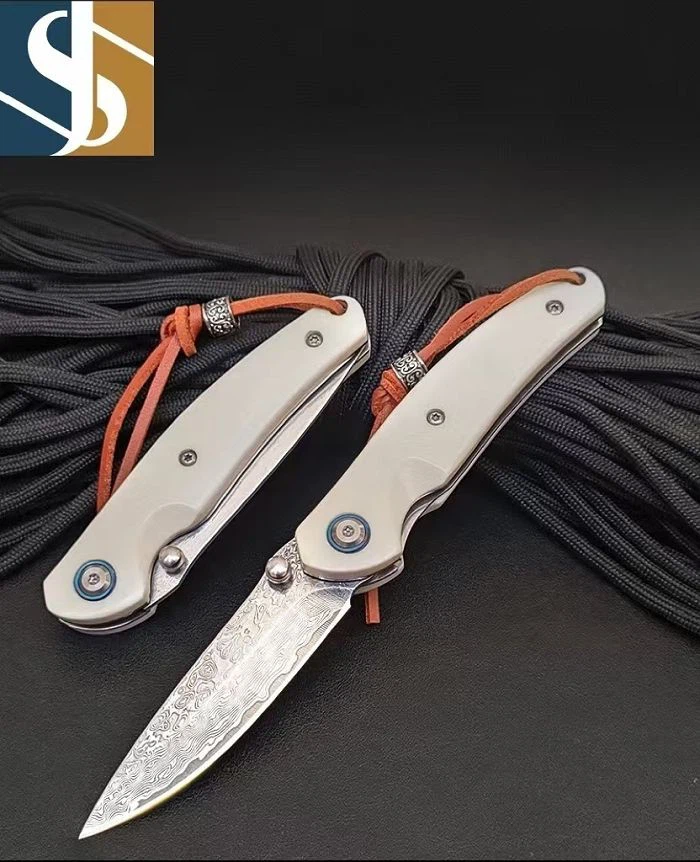
We offer a wide range of kitchen knives, including Damascus Steel Ghost Blades, Damascus Pocket Knives, and Damascus Blade Folding Knives. Our knives are made from premium materials and are designed to be durable and sharp. We also provide resources and guidance on how to care for and sharpen your knives to ensure they last a long time.
If you're in the market for new kitchen knives or need help with sharpening your existing blades, I encourage you to get in touch with us. Our team of experts is ready to answer your questions, offer advice, and assist you with your purchasing decisions. We can also provide information on proper knife maintenance techniques to keep your knives in top condition.
In conclusion, while sharpening a very dull kitchen cutting knife can be challenging, it is definitely possible with the right tools and techniques. Whether you choose to sharpen your knife at home using a whetstone, a knife sharpener, or take it to a professional, taking good care of your knives will ensure they remain sharp and effective for years to come.
References
- "The Complete Guide to Knife Sharpening" by Peter Adams
- "Knife Skills: Mastering the Art of Cutting" by James Kitchen
- Product manuals and literature from knife manufacturers