


Hey there, fellow kitchen enthusiasts! As a supplier of top - notch kitchen cutting knives, I often get asked the question: "Is it necessary to oil a kitchen cutting knife?" Well, let's dive right into this topic and find out.
First off, let's talk about why oiling a knife could be a good idea. One of the main reasons is to prevent rust. You see, most kitchen knives are made of metal, and metal is prone to rust when it comes into contact with moisture. Whether it's from the water you use to wash the knife or the humidity in the air, moisture can start to break down the metal over time. A thin layer of oil acts as a barrier between the metal and the moisture, keeping rust at bay.
Take our Damascus Bamboo Handle Tanto Knife for example. This beauty has a high - quality Damascus steel blade. Damascus steel is known for its strength and sharpness, but it's also more susceptible to rust compared to some other types of steel. By oiling it regularly, you can ensure that the blade stays in tip - top condition for years to come.
Another benefit of oiling your kitchen knife is that it can help with the knife's performance. When you oil the blade, it reduces friction. This means that when you're cutting through food, the knife glides more smoothly. You won't have to put as much effort into slicing, dicing, or chopping. It's like giving your knife a little boost of energy!
Now, let's consider the types of oil you can use. There are a few options out there. Food - grade mineral oil is a popular choice. It's safe to use around food, won't go rancid, and it's easy to apply. You can find it at most grocery stores or online. Another option is vegetable oil. However, vegetable oil can go rancid over time, so you'll need to re - oil your knife more frequently if you choose this option.
But is oiling always necessary? Well, it depends on the type of knife and how you use it. If you have a stainless - steel knife, which is more resistant to rust than other types of steel, you might not need to oil it as often. Stainless - steel knives are great for everyday use in the kitchen, and they can withstand a bit more exposure to moisture.
On the other hand, if you have a high - carbon steel knife, like our Rose Wood Handle Knife Damascus, oiling is almost a must. High - carbon steel is very sharp and holds an edge well, but it rusts easily. So, to keep that sharp edge and prevent rust, regular oiling is essential.
Let's also talk about how to oil your knife properly. First, make sure your knife is clean and dry. You don't want to trap any dirt or moisture under the oil. Then, apply a small amount of oil to a clean cloth. Rub the oil onto the blade, making sure to cover the entire surface, including the edges. You don't need to go overboard with the oil; a thin, even layer is all you need. After applying the oil, wipe off any excess with a clean part of the cloth.

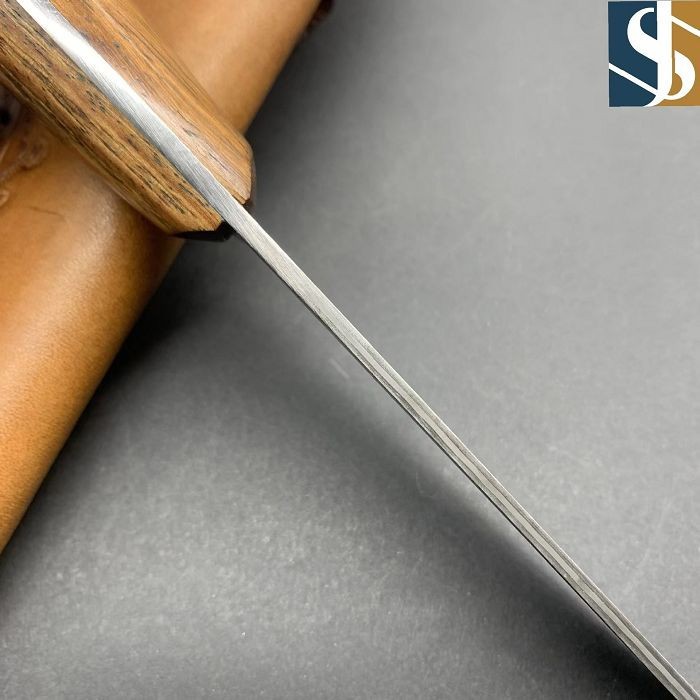
It's also important to note that oiling isn't just for the blade. If your knife has a wooden handle, like our Damascus Wooden Handle Folding Knife, oiling the handle can help keep the wood in good condition. Wood can dry out and crack over time, especially if it's exposed to moisture or changes in temperature. A little bit of oil can keep the wood looking great and prevent it from splitting.
Now, let's address some concerns that people might have about oiling their kitchen knives. Some folks worry that the oil will make the knife slippery and dangerous to use. But if you apply the oil correctly and wipe off the excess, this shouldn't be a problem. The thin layer of oil won't make the knife overly slippery; in fact, it can actually help with grip in some cases.
Others might think that oiling is too much of a hassle. But really, it only takes a few minutes every now and then. And when you consider the benefits of keeping your knife in good condition, it's definitely worth the effort.
In conclusion, while it might not be necessary to oil every single kitchen knife you own, it's a good practice for most. It helps prevent rust, improves performance, and can extend the life of your knife. Whether you're a professional chef or just someone who loves to cook at home, taking a little time to oil your knives can make a big difference.
If you're in the market for a new kitchen cutting knife, we've got a wide range of high - quality options available. And if you have any questions about knife care, including oiling, don't hesitate to reach out. We're here to help you make the most of your kitchen tools. So, if you're interested in purchasing our knives or want to discuss your specific needs, feel free to start a conversation with us. We're looking forward to working with you to find the perfect knife for your kitchen!
References:
- "The Complete Guide to Kitchen Knife Care" by Knife Experts Magazine
- "Knife Maintenance 101" from Home Cooking Today