


When it comes to storing a Damascus knife, proper wrapping is crucial to maintain its sharpness, protect its unique patterns, and prevent damage. As a trusted Damascus knife supplier, I've witnessed firsthand the importance of correct storage techniques. In this blog, I'll share some expert tips on how to wrap a Damascus knife for storage, ensuring it remains in pristine condition for years to come.
Understanding the Significance of Proper Wrapping
Before delving into the wrapping process, it's essential to understand why proper wrapping is so important. Damascus knives are renowned for their exceptional craftsmanship and stunning patterns, which are a result of the intricate forging process. These knives are often made from high - quality steel, which can be susceptible to corrosion and damage if not stored correctly.
A well - wrapped Damascus knife is protected from environmental factors such as moisture, dust, and scratches. Moisture can lead to rust, which not only damages the blade's appearance but also compromises its integrity. Dust can accumulate on the blade and in the handle, causing abrasions over time. Scratches can dull the blade and detract from the knife's overall aesthetic appeal.
Materials Needed for Wrapping
To wrap a Damascus knife properly, you'll need a few essential materials:
- Soft Cloth: A microfiber cloth or a soft cotton cloth is ideal. These materials are gentle on the blade and won't scratch the surface. They can also absorb any moisture that may be present on the knife.
- Knife Sheath or Pouch: A high - quality leather or nylon sheath can provide an extra layer of protection. It should fit the knife snugly to prevent movement during storage.
- Silica Gel Packs: These packs help absorb moisture and keep the environment inside the storage container dry. Place a few packs inside the sheath or storage box.
- Storage Box: A wooden or plastic box can be used to store the wrapped knife. It should be large enough to accommodate the knife without squeezing it.
Step - by - Step Wrapping Process
Step 1: Clean the Knife
Before wrapping the knife, it's important to clean it thoroughly. Use a mild soap and warm water to remove any dirt, fingerprints, or debris from the blade and handle. Dry the knife completely with a soft cloth to prevent moisture from causing rust.
Step 2: Apply a Protective Coating
To further protect the blade from corrosion, apply a thin layer of knife oil or a corrosion - resistant spray. Use a clean cloth to spread the oil evenly over the blade, paying special attention to the edges. Wipe off any excess oil to prevent it from attracting dust.
Step 3: Wrap the Blade with Cloth
Take the soft cloth and wrap it around the blade, starting from the tip and working your way towards the handle. Make sure the cloth is wrapped tightly but not so tight that it deforms the blade. You can use multiple layers of cloth for added protection.
Step 4: Place the Knife in a Sheath or Pouch
Once the blade is wrapped, carefully place the knife in a sheath or pouch. Ensure that the sheath fits the knife properly and that the blade is fully inserted. If the sheath has a belt loop or other attachment, make sure it's secured.
Step 5: Add Silica Gel Packs
Place a few silica gel packs inside the sheath or pouch. These packs will absorb any moisture that may enter the storage area and help keep the knife dry.

Step 6: Store the Knife in a Box
Finally, place the sheathed knife in a storage box. The box should be kept in a cool, dry place away from direct sunlight and humidity. Avoid storing the knife in a place where it may be jostled or bumped.
Specific Considerations for Different Types of Damascus Knives
Mini Damascus Beef Bone Handle Folding Knife
The Mini Damascus Beef Bone Handle Folding Knife is a compact and versatile tool. When wrapping this type of knife, pay special attention to the folding mechanism. Make sure it's clean and dry before wrapping. You can use a small piece of cloth to protect the hinge area. When placing it in a sheath, ensure that the sheath is designed to accommodate the folded knife.
Damascus Point Knife
The Damascus Point Knife has a sharp, pointed blade that requires extra care. When wrapping the blade, be careful not to bend or damage the tip. You may want to use a piece of foam or a soft insert to protect the tip inside the sheath. This will prevent the tip from being dulled or broken during storage.
Damascus Antlers Handle
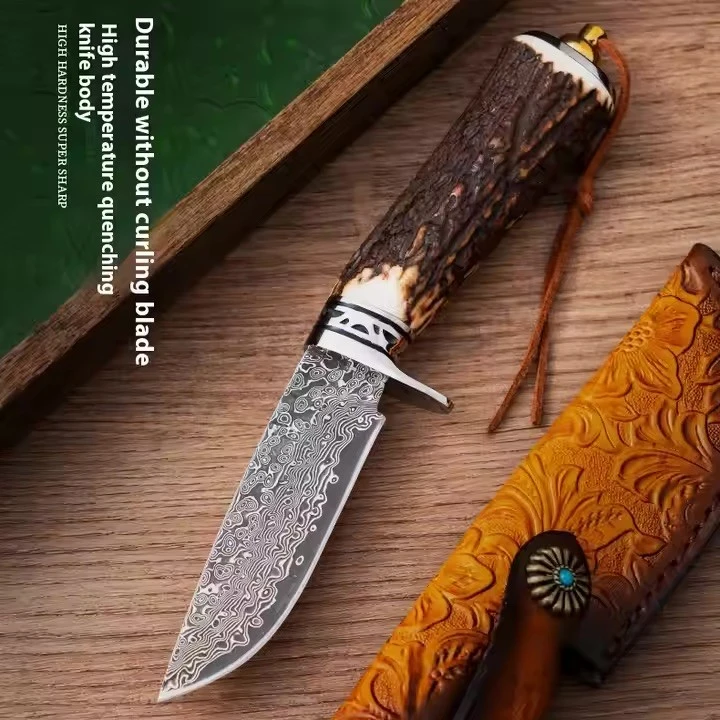
The Damascus Antlers Handle adds a unique and natural touch to the knife. When wrapping this type of knife, avoid using any harsh chemicals or cleaners on the antler handle. Instead, use a soft, dry cloth to clean it. When storing the knife, make sure the antler handle is protected from scratches and impacts.
Tips for Long - Term Storage
If you plan to store your Damascus knife for an extended period, here are some additional tips:
- Inspect the Knife Regularly: Check the knife every few months to ensure that it's still in good condition. Look for any signs of rust, corrosion, or damage.
- Reapply Protective Coating: Over time, the protective coating on the blade may wear off. Reapply the knife oil or corrosion - resistant spray every six months or so to maintain protection.
- Rotate the Knife: If you have multiple Damascus knives in storage, rotate them periodically. This will prevent any one knife from being in the same position for too long, which could lead to uneven wear.
Conclusion
Properly wrapping a Damascus knife for storage is an essential part of knife maintenance. By following the steps outlined in this blog, you can ensure that your Damascus knife remains in excellent condition for years to come. Whether you're a collector, a chef, or an outdoor enthusiast, taking the time to wrap and store your knife correctly will preserve its beauty and functionality.
If you're interested in purchasing high - quality Damascus knives or have any questions about knife storage, please feel free to contact us for more information and to discuss potential procurement opportunities. We're always here to assist you in finding the perfect Damascus knife for your needs.
References
- "The Art of Knife Making" by David Boye
- "Knife Care and Maintenance Guide" by Blade Magazine