


As a trusted outdoor tanto knife supplier, I understand the significance of maintaining these exceptional tools in top - notch condition. Outdoor tanto knives are not only practical but also a reliable companion for various outdoor activities. Cleaning your outdoor tanto knife regularly is essential to ensure its longevity, performance, and aesthetic appeal. In this blog, I'll guide you through a step - by - step process on how to clean an outdoor tanto knife effectively.
Step 1: Gather Your Cleaning Supplies
Before you start the cleaning process, it's crucial to gather all the necessary supplies. You'll need mild dish soap, warm water, a soft - bristle brush (such as a toothbrush), a microfiber cloth, a small container, and some mineral oil or knife - specific lubricant. Having these items ready will make the cleaning process smoother and more efficient.
Step 2: Disassemble the Knife (if possible)
Many outdoor tanto knives can be disassembled, which allows for a more thorough cleaning. If your knife has removable parts like a handle scale or a locking mechanism, carefully take them apart. Refer to the manufacturer's instructions if you're unsure how to disassemble your knife properly. Be sure to keep all the small parts organized, perhaps by placing them on a clean towel or in a small container.
Step 3: Rinse the Blade
Start by rinsing the blade under warm running water. This will help remove any loose dirt, debris, or blood (if the knife has been used for hunting or other activities). Hold the knife firmly by the handle and let the water flow over the blade from the spine to the edge. Avoid using high - pressure water, as it could damage the blade's edge or force debris into hard - to - reach areas.
Step 4: Prepare the Cleaning Solution
Fill a small container with warm water and add a few drops of mild dish soap. Stir the solution gently to create a soapy mixture. The mild dish soap is effective at breaking down grease and grime without being too harsh on the knife's blade or handle materials.
Step 5: Clean the Blade
Dip the soft - bristle brush into the soapy water and gently scrub the blade. Pay special attention to the areas around the edge, the ricasso (the unsharpened part near the handle), and any grooves or serrations. Use a back - and - forth motion to remove stubborn dirt and stains. Avoid applying too much pressure, as this could scratch the blade.
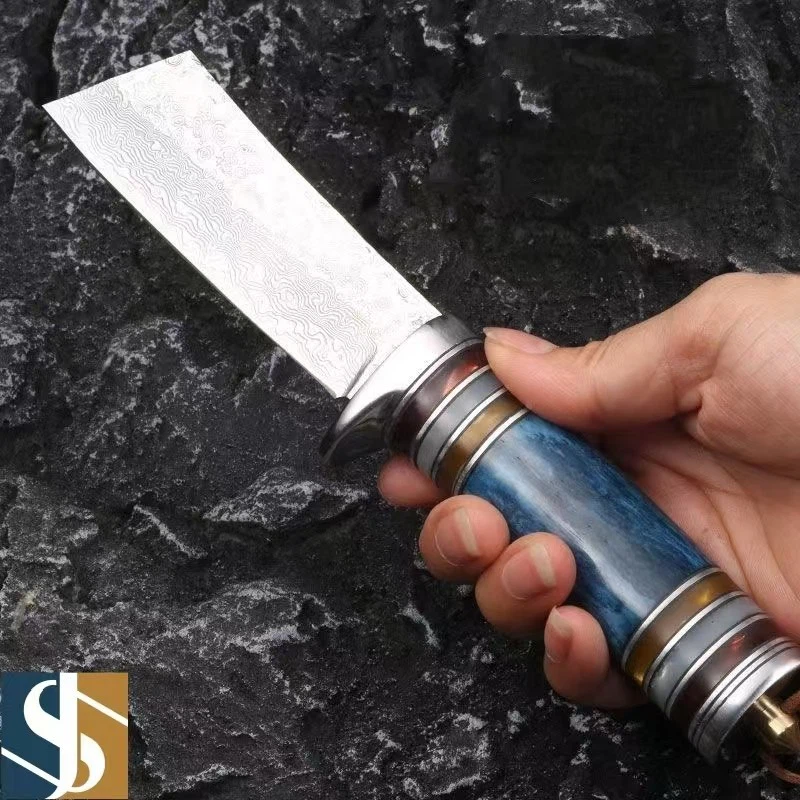
If your knife has a damascus pattern, be extra careful when cleaning. The damascus steel is made by forging different types of steel together, and aggressive scrubbing could damage the pattern. For a damascus blade, you can also use a specialized damascus knife cleaner. We offer a great selection of Damascus Steel Tanto Knife that are known for their beautiful patterns and high - quality performance.
Step 6: Clean the Handle
After cleaning the blade, it's time to clean the handle. Dip the brush or a microfiber cloth into the soapy water and wipe down the handle. Different handle materials require different cleaning approaches. For example, if your knife has a wooden handle like the Rose Wood Handle Knife Damascus, avoid soaking it in water for too long, as this could cause the wood to warp or crack. Instead, gently wipe the handle and dry it immediately.
If the handle is made of synthetic materials such as G10 or Micarta, you can be a bit more liberal with the cleaning. Scrub the handle to remove any dirt or fingerprints. For shell - handled knives like the Damascus Shell Handle Small Folding Knife, use a soft cloth to avoid scratching the delicate shell surface.
Step 7: Rinse and Dry
Once you've finished cleaning the blade and handle, rinse them thoroughly under warm water to remove all the soap residue. After rinsing, use a clean microfiber cloth to dry the knife completely. Pay close attention to the areas where water might collect, such as the tang (the part of the blade that extends into the handle) and the pivot point of a folding knife.

Step 8: Lubricate the Knife
Lubrication is an important step in maintaining your outdoor tanto knife. Apply a small amount of mineral oil or knife - specific lubricant to the blade, pivot point (if it's a folding knife), and any moving parts. Use a clean cloth or a cotton swab to spread the lubricant evenly. The lubricant helps prevent rust and corrosion, and it also ensures smooth operation of the knife.
Step 9: Reassemble the Knife
If you disassembled the knife earlier, now is the time to put it back together. Carefully align the parts and follow the reverse order of disassembly. Make sure all the parts fit snugly and that the locking mechanism (if applicable) functions properly.
Step 10: Store the Knife Properly
After cleaning and lubricating your knife, store it in a dry and cool place. You can use a knife sheath or a knife case to protect it from dust, moisture, and physical damage. Avoid storing the knife in a place where it could come into contact with other sharp objects or corrosive materials.
Additional Tips for Maintaining Your Outdoor Tanto Knife
- Regular Inspection: Periodically inspect your knife for signs of wear, damage, or rust. Check the blade's edge for any nicks or chips, and examine the handle for loose parts or cracks.
- Sharpening: Keep your knife sharp by using a proper sharpening tool. A sharp knife is not only more effective but also safer to use.
- Avoid Exposure to Harsh Chemicals: Don't let your knife come into contact with strong acids, alkalis, or other harsh chemicals, as these can damage the blade and handle materials.
As an outdoor tanto knife supplier, I'm committed to providing high - quality knives and sharing valuable information on knife maintenance. If you're interested in purchasing a new outdoor tanto knife or have any questions about our products, feel free to reach out to us for a procurement discussion. We're here to help you find the perfect knife for your needs.
References
- "The Complete Guide to Knife Care and Maintenance" by Knife Magazine
- Manufacturer's instructions for outdoor tanto knives