


When it comes to outdoor adventures, having the right equipment is crucial, and an outdoor knife is one of the most essential tools you can carry. As an outdoor knife supplier, I've seen firsthand the importance of choosing the right knife for your needs. In this blog post, I'll share some key factors to consider when selecting an outdoor knife, and I'll also introduce you to some of our top products.
Blade Material
The blade material is one of the most important factors to consider when choosing an outdoor knife. Different materials offer different properties, such as sharpness, durability, and corrosion resistance. Here are some common blade materials and their characteristics:
- Stainless Steel: Stainless steel is a popular choice for outdoor knives because it is corrosion-resistant and easy to maintain. It also holds an edge well and is relatively affordable. However, some stainless steels may not be as hard as other materials, which means they may dull more quickly.
- Carbon Steel: Carbon steel is known for its sharpness and ability to hold an edge. It is also relatively easy to sharpen. However, carbon steel is more prone to corrosion than stainless steel, so it requires more maintenance.
- Damascus Steel: Damascus steel is a type of steel that is known for its beautiful pattern and excellent performance. It is made by folding and forging layers of different steels together, which gives it a unique combination of strength, sharpness, and corrosion resistance. Damascus steel knives are often more expensive than other types of knives, but they are also very durable and can last a lifetime.
Blade Shape
The blade shape of an outdoor knife can also have a significant impact on its performance. Different blade shapes are designed for different tasks, so it's important to choose a shape that suits your needs. Here are some common blade shapes and their uses:
- Drop Point: The drop point blade is one of the most popular blade shapes for outdoor knives. It has a curved blade with a gentle slope from the spine to the tip, which makes it ideal for a variety of tasks, such as cutting, slicing, and skinning.
- Clip Point: The clip point blade has a sharp, pointed tip that is ideal for piercing and detailed work. It is often used for tasks such as opening packages, carving, and fishing.
- Tanto Point: The tanto point blade has a straight, angular tip that is very strong and durable. It is often used for tasks such as self-defense, combat, and heavy-duty cutting.
- Sheepsfoot: The sheepsfoot blade has a straight edge and a rounded tip, which makes it ideal for tasks such as slicing and cutting without the risk of accidentally piercing something. It is often used for tasks such as food preparation, gardening, and general outdoor work.
Handle Material
The handle material of an outdoor knife is also important because it affects the comfort and grip of the knife. Different handle materials offer different properties, such as durability, comfort, and water resistance. Here are some common handle materials and their characteristics:
- Wood: Wood is a traditional handle material that is known for its natural beauty and comfortable grip. It is also relatively lightweight and easy to work with. However, wood is not as durable as some other materials and may require more maintenance.
- G10: G10 is a type of fiberglass laminate that is known for its strength, durability, and resistance to moisture and chemicals. It is also lightweight and has a good grip. G10 handles are often used on high-end outdoor knives.
- Micarta: Micarta is a type of composite material that is made by combining layers of fabric or paper with a resin. It is known for its strength, durability, and resistance to moisture and chemicals. Micarta handles are often used on high-end outdoor knives.
- Rubber: Rubber is a popular handle material because it provides a comfortable and secure grip, even when wet. It is also relatively lightweight and easy to clean. Rubber handles are often used on knives that are designed for outdoor activities such as fishing, hunting, and camping.
Knife Type
There are several different types of outdoor knives to choose from, each designed for a specific purpose. Here are some common types of outdoor knives and their uses:
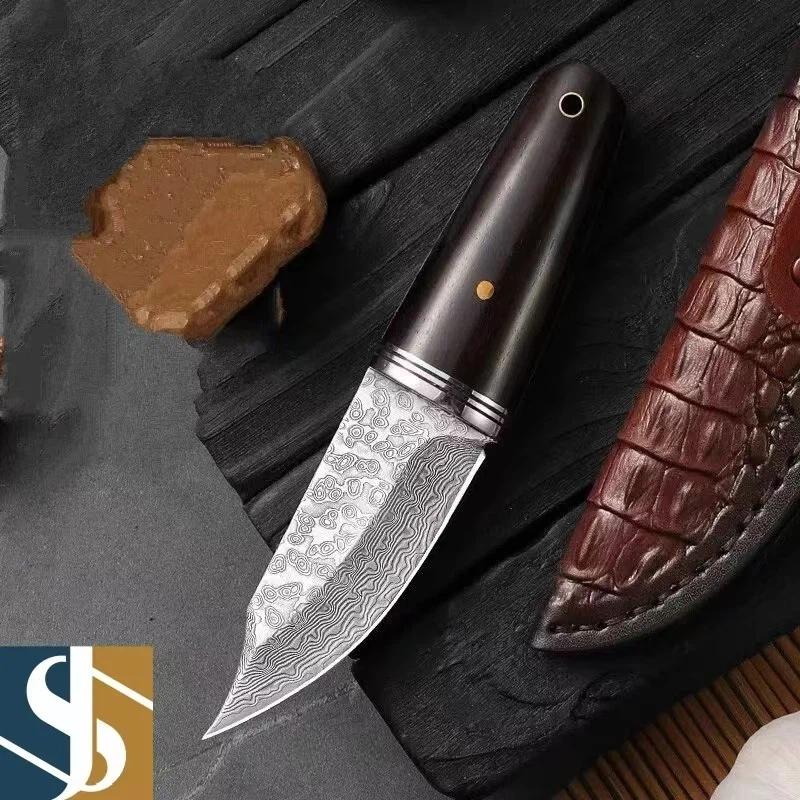

- Fixed Blade Knife: A fixed blade knife is a knife with a blade that is permanently attached to the handle. Fixed blade knives are generally stronger and more durable than folding knives, and they are often used for heavy-duty tasks such as chopping, splitting, and skinning.
- Folding Knife: A folding knife is a knife with a blade that can be folded into the handle. Folding knives are more portable and convenient than fixed blade knives, and they are often used for tasks such as everyday carry, camping, and hiking.
- Multi-Tool: A multi-tool is a tool that combines several different functions into one compact device. Multi-tools often include a knife, as well as other tools such as pliers, screwdrivers, and saws. Multi-tools are very versatile and can be useful in a variety of situations.
Our Top Products
As an outdoor knife supplier, we offer a wide range of high-quality outdoor knives to meet the needs of our customers. Here are some of our top products:
- Damascus Point Knife: This knife features a beautiful Damascus steel blade with a drop point shape. The blade is sharp and durable, and it holds an edge well. The handle is made of high-quality wood, which provides a comfortable and secure grip.
- Damascus Bovine Bone Folding Knife: This folding knife features a Damascus steel blade with a clip point shape. The blade is sharp and easy to open and close. The handle is made of bovine bone, which gives it a unique and beautiful appearance.
- Damascus Steel Ghost Blade: This knife features a Damascus steel blade with a tanto point shape. The blade is very strong and durable, and it is ideal for heavy-duty tasks. The handle is made of G10, which provides a comfortable and secure grip.
Conclusion
Choosing the right outdoor knife is an important decision that can have a significant impact on your outdoor experience. By considering factors such as blade material, blade shape, handle material, and knife type, you can choose a knife that is suitable for your needs and preferences. As an outdoor knife supplier, we are committed to providing our customers with high-quality outdoor knives that are designed to perform in the toughest conditions. If you have any questions or would like to learn more about our products, please don't hesitate to contact us. We look forward to helping you find the perfect outdoor knife for your next adventure.
References
- "Knife Blade Materials: A Comprehensive Guide." Knife Depot.
- "Blade Shapes and Their Uses." Outdoor Life.
- "Handle Materials for Knives." BladeHQ.