


Hey there, fellow foodies and home chefs! If you're like me, you know that having the right tools in the kitchen can make all the difference. And when it comes to food prep, a high-quality knife is an absolute must. But if you're working in a small kitchen, choosing the right knife can be a bit tricky. You want something that's sharp, durable, and easy to handle, but you also don't want it to take up too much space. Well, lucky for you, I'm here to help! As a high-quality knife supplier, I've got plenty of tips and tricks to share. So, let's dive in and learn how to choose the perfect knife for your small kitchen.
Understanding Your Needs
First things first, you need to understand what you'll be using your knife for. Are you mainly chopping vegetables, slicing meat, or maybe a bit of both? Different knives are designed for different tasks, so it's important to choose one that suits your needs.
For general food prep, a chef's knife is a great all-around option. It's versatile and can handle a variety of tasks, from chopping onions to slicing tomatoes. A paring knife, on the other hand, is perfect for more delicate tasks like peeling fruits and vegetables or trimming small pieces of meat. And if you're a fan of slicing bread, a serrated knife is a must-have.
Size Matters
When you're working in a small kitchen, size really does matter. You don't want a knife that's too big and bulky, as it can be difficult to maneuver and take up valuable counter space. Look for knives that are compact and easy to handle.
A chef's knife with a blade length of around 6 to 8 inches is usually a good choice for a small kitchen. It's big enough to handle most tasks but not so large that it becomes cumbersome. A paring knife with a blade length of 3 to 4 inches is also ideal, as it's small and precise.
Blade Quality
The quality of the blade is crucial when it comes to choosing a high-quality knife. You want a blade that's sharp, durable, and easy to maintain.
Stainless steel blades are a popular choice because they're resistant to rust and corrosion. They're also relatively easy to sharpen. However, they may not hold their edge as well as some other types of blades.
Carbon steel blades, on the other hand, are known for their sharpness and ability to hold an edge. They're also more responsive to sharpening, which means you can keep them razor-sharp for longer. However, they're more prone to rust and require more maintenance.
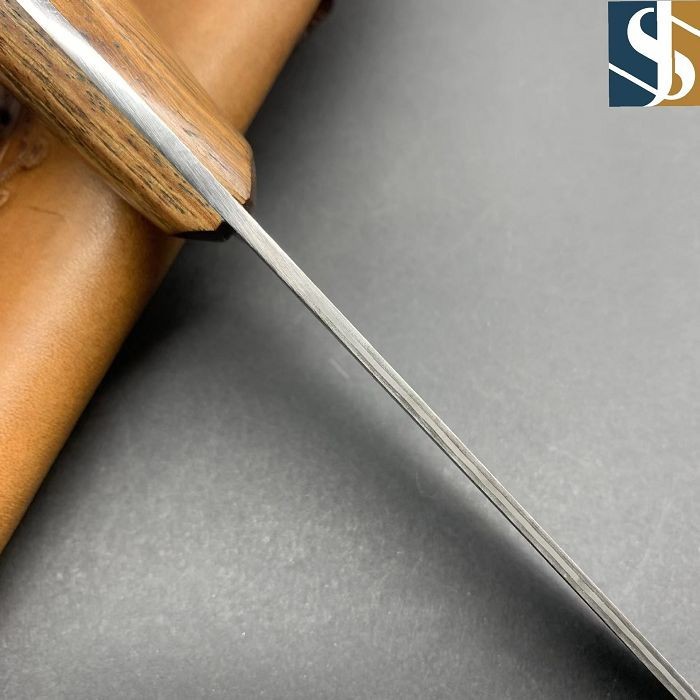
Another option is a Damascus steel blade. Damascus steel is a type of steel that's known for its beautiful pattern and excellent cutting performance. It's also very durable and can hold an edge well. If you're looking for a high-quality knife with a unique look, a Damascus Point Knife might be the perfect choice for you.
Handle Comfort
The handle of the knife is just as important as the blade. You want a handle that's comfortable to hold and provides a good grip.
Look for handles that are made from materials like wood, plastic, or rubber. Wood handles are beautiful and provide a natural feel, but they require more maintenance. Plastic and rubber handles are more durable and easy to clean, but they may not have the same aesthetic appeal as wood.
The shape of the handle is also important. You want a handle that fits comfortably in your hand and allows you to maintain a good grip. Some handles are designed to be ergonomic, which means they're shaped to fit the natural contours of your hand. This can help reduce fatigue and improve your cutting performance.
Maintenance and Care
Proper maintenance and care are essential for keeping your knife in top condition. Here are some tips to help you take care of your knife:
- Sharpen regularly: A sharp knife is not only safer to use but also performs better. Invest in a good quality knife sharpener and sharpen your knife regularly.
- Clean after each use: Wash your knife with warm, soapy water after each use and dry it thoroughly. Avoid leaving your knife in the sink or dishwasher, as this can cause it to rust.
- Store properly: Store your knife in a knife block, sheath, or magnetic strip to protect the blade and prevent it from getting damaged.
Our Recommendations
As a high-quality knife supplier, we have a wide range of knives to choose from. Here are some of our top recommendations for small kitchens:
- Rose Wood Handle Knife Damascus: This beautiful knife features a Damascus steel blade and a rosewood handle. It's sharp, durable, and looks great in any kitchen.
- Hardness 60 ± 2 Damascus Antlers Handle: This knife is made with a high-quality Damascus steel blade and an antlers handle. It has a hardness of 60 ± 2, which means it can hold an edge well and is very durable.
- Chef's Knife Set: Our chef's knife set includes a chef's knife, a paring knife, and a serrated knife. It's the perfect all-around set for any small kitchen.
Conclusion
Choosing a high-quality knife for food prep in a small kitchen doesn't have to be difficult. By understanding your needs, considering the size and quality of the blade and handle, and taking proper care of your knife, you can find the perfect knife for your kitchen.
If you're interested in purchasing a high-quality knife, we'd love to hear from you. We offer a wide range of knives at competitive prices, and our team of experts is always available to help you choose the right knife for your needs. Contact us today to start your purchase negotiation!

References
- "The Art of Choosing the Right Kitchen Knife." Cook's Illustrated.
- "Kitchen Knife Buying Guide." Williams Sonoma.
- "How to Care for Your Kitchen Knives." Food Network.