


When it comes to edged weapons, the tanto sword and European daggers stand out as remarkable examples of craftsmanship and functionality from different cultural and historical backgrounds. As a tanto sword supplier, I've had the privilege of delving deep into the nuances of these blades, and I'm excited to share a detailed comparison between the two.

Historical Background
The tanto sword has its roots in ancient Japan. Initially designed as a stabbing weapon for samurai, the tanto was often used in close - quarter combat and was also a symbol of the samurai's status. It first appeared around the 10th century and continued to evolve over the centuries. The design was influenced by the need for a reliable weapon in situations where a full - sized sword might be cumbersome.
On the other hand, European daggers have a long and diverse history. They date back to the Bronze Age and were used across different regions of Europe, from the Vikings in the north to the Romans in the south. European daggers were used for various purposes, including self - defense, hunting, and as a sidearm in warfare. Different cultures in Europe developed their own unique styles of daggers, such as the Scottish sgian - dubh and the Italian stiletto.
Design and Construction
Blade Shape
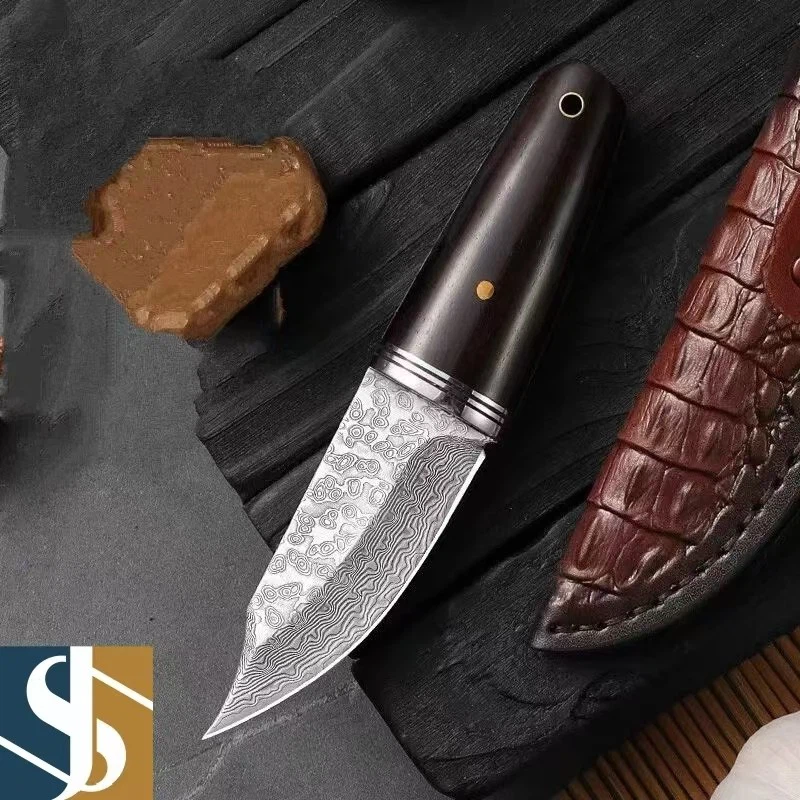
The tanto blade is characterized by its straight, single - edged or double - edged blade with a distinct point. The point is usually very sharp and robust, making it ideal for thrusting. The blade often has a relatively short length, typically ranging from 15 to 30 centimeters. The shape of the tanto blade allows for efficient penetration of armor, which was crucial in the samurai era when facing opponents wearing metal or leather armor.
European daggers come in a wide variety of blade shapes. Some, like the stiletto, have a long, thin, and sharply pointed blade designed specifically for stabbing. Others, such as the dirk, have a broader blade with a more curved shape, which can be used for both stabbing and slashing. The blade length of European daggers can vary greatly, from small, concealable daggers to larger ones that are almost as long as a short sword.
Handle Design
Tanto swords usually have a handle that is designed to provide a secure grip during combat. The handle is often wrapped with materials like ray skin or silk cord, which not only enhances the grip but also adds to the aesthetic appeal of the weapon. The handle is typically short, allowing for precise control in close - range fighting.
European dagger handles also vary in design. Some have simple, wooden handles, while others are more elaborate, with materials like bone, ivory, or precious metals. The handle design often reflects the cultural and social status of the owner. For example, a nobleman's dagger might have a handle adorned with jewels or intricate carvings.
Construction Materials
In the past, tanto swords were made primarily from high - quality steel. Japanese swordsmiths used a process called differential hardening, which involved heating and cooling the blade in a specific way to create a hard cutting edge and a more flexible spine. This made the tanto blade strong, durable, and able to hold a sharp edge.
European daggers were also made from steel, but the manufacturing processes varied depending on the region and the time period. Some European daggers were made using advanced forging techniques, while others were cast. In addition to steel, other materials like bronze were also used in the early days of dagger production.
Functionality
Combat Use
The tanto sword was mainly designed for thrusting attacks. Its sharp point and strong blade could easily penetrate armor, making it a formidable weapon in close - quarter combat. Samurai would often use the tanto in situations where they needed to finish off an opponent or when their main sword was lost or broken.
European daggers had a more diverse range of combat uses. Depending on the blade shape, they could be used for stabbing, slashing, or even blocking attacks. In some European military tactics, soldiers would use daggers in combination with other weapons, such as shields or longer swords.
Non - Combat Use
In Japanese culture, the tanto had symbolic value beyond its combat use. It was often passed down through generations as a family heirloom and was also used in certain rituals. For example, in the act of seppuku (ritual suicide), a tanto was used.
European daggers also had non - combat uses. They were commonly used as eating utensils in medieval Europe, and some were designed as status symbols. A finely crafted dagger could be a sign of wealth and power.
Aesthetic Appeal
The tanto sword is known for its elegant and minimalist design. The combination of the sharp blade and the carefully crafted handle creates a visually striking weapon. The traditional Japanese aesthetic, which emphasizes simplicity and functionality, is evident in the design of the tanto.
European daggers, on the other hand, often showcase more elaborate and ornate designs. The use of precious materials and intricate carvings on the handle and blade make them works of art. Different regions in Europe developed their own unique styles, each with its own distinct aesthetic.
Modern - Day Relevance
In modern times, tanto swords and European daggers are no longer used as primary weapons in warfare. However, they still have a significant following among collectors, martial artists, and enthusiasts.
As a tanto sword supplier, I offer a wide range of tanto swords that are not only replicas of historical designs but also incorporate modern materials and manufacturing techniques. For example, our Mini Damascus Beef Bone Handle Folding Knife combines the traditional tanto design with the beauty of Damascus steel and a unique beef bone handle. It is perfect for collectors who appreciate the artistry of Japanese blades.
We also have the Damascus Mini Samurai Sword, which is a smaller version of the traditional samurai sword but with the same sharpness and precision as a tanto. This sword is ideal for martial artists who want to practice traditional Japanese sword techniques.
In addition, our Damascus Point Knife takes inspiration from both the tanto and European dagger designs. It features a sharp point and a strong blade, making it suitable for various cutting and stabbing tasks.
Conclusion
In conclusion, the tanto sword and European daggers are both fascinating weapons with rich histories, unique designs, and diverse functionalities. While they share some similarities, such as being used for close - quarter combat, they also have significant differences in terms of blade shape, handle design, and cultural significance.
Whether you are a collector, a martial artist, or simply someone interested in edged weapons, there is a tanto sword or European dagger out there for you. If you are interested in purchasing high - quality tanto swords or exploring our range of products, I encourage you to reach out for a procurement discussion. We are committed to providing you with the best products and services, and I look forward to hearing from you.
References
- Turnbull, Stephen. "The Samurai Sword: From Casting to Combat." Osprey Publishing, 2002.
- Blair, Claude. "European Weapons and Armour: From the Renaissance to the Industrial Revolution." Weidenfeld & Nicolson, 1976.
- Brown, David. "The History of Japanese Swords." Kodansha International, 1993.