


In the realm of Japanese swords, the tanto holds a distinct and revered position, setting itself apart from other traditional blades in numerous ways. As a supplier of tanto swords, I have had the privilege of delving deep into the intricacies of these remarkable weapons, and I am excited to share the unique characteristics that differentiate them from their counterparts.
Physical Characteristics
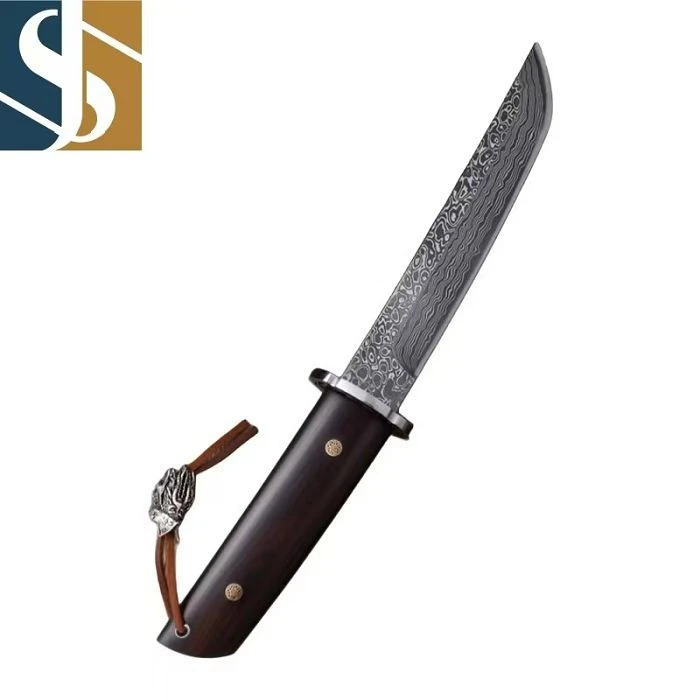
One of the most noticeable differences between a tanto and other Japanese swords lies in its size and shape. While swords like the katana are known for their long, curved blades designed for slashing attacks, the tanto is characterized by its short, straight blade. Typically ranging from 15 to 30 centimeters in length, the tanto's compact size makes it highly maneuverable and well - suited for close - quarters combat.
The blade of a tanto is also single - edged, with a sharp point that is extremely effective for thrusting. This design was a response to the specific combat needs of the samurai. In situations where space was limited, such as inside buildings or during hand - to - hand combat, the tanto's thrusting ability provided a significant advantage. In contrast, the katana and wakizashi, with their curved blades, were more optimized for cutting and slashing motions.
The hilt of a tanto is another area where it diverges from other Japanese swords. Tanto hilts are often shorter and more compact, designed to be held with one hand. This is in contrast to the longer hilts of the katana, which are meant to be held with two hands to deliver powerful slashes. The shorter hilt of the tanto allows for a more precise and controlled grip, which is essential when using the blade for stabbing and close - range fighting.
Historical and Cultural Significance
The tanto has a rich and storied history that is deeply intertwined with Japanese culture. It dates back to the Heian period (794 - 1185), where it was initially used as a tool for hunting and self - defense. Over time, as the samurai class emerged and warfare became more prevalent, the tanto evolved into a weapon of choice for close - quarters combat.
In Japanese society, the tanto was not only a weapon but also a symbol of status and honor. Samurai would often carry a tanto alongside their katana and wakizashi as part of their traditional daisho (a set of two swords). The tanto was seen as a personal weapon, often passed down through generations within a family. It was also used in ritualistic practices, such as seppuku (ritual suicide). A samurai would use a tanto to perform the act of self - disembowelment, a practice that was considered a noble way to atone for one's mistakes or to avoid capture and humiliation in battle.
This cultural significance sets the tanto apart from other Japanese swords. While the katana is often associated with the grandeur of samurai warfare and the art of swordsmanship, the tanto has a more personal and intimate connection with the samurai. It represents the final line of defense, as well as a symbol of the samurai's unwavering code of honor.
Manufacturing Techniques
The process of making a tanto is similar to that of other Japanese swords in some aspects, but there are also key differences. Both tanto and other Japanese swords are made using traditional forging techniques, which involve heating and hammering layers of high - carbon and low - carbon steel together. This process, known as folding, creates a strong and flexible blade with a sharp edge.
However, due to its shorter length and different shape, the forging process for a tanto requires more precise control. The smith must carefully shape the blade to ensure that the point is sharp and the edge is straight. The tempering process is also crucial, as it determines the hardness and flexibility of the blade. A well - tempered tanto will have a hard edge that can hold a sharp point for thrusting, while the core of the blade remains flexible to prevent it from breaking.
Another difference in the manufacturing of a tanto is the handle construction. Tanto handles are often made with different materials and designs compared to other Japanese swords. They may feature elaborate carvings or inlays, which not only add to the aesthetic appeal but also provide a better grip. The use of materials such as ray skin, silk cord, and precious metals in the handle construction is common, reflecting the tanto's status as a personal and often highly - decorated weapon.

Modern Applications and Collectibility
In modern times, the tanto has found new applications beyond its historical use in warfare. It is now a popular choice among collectors, martial artists, and enthusiasts of Japanese culture. Collectors are drawn to the tanto's unique design, historical significance, and the craftsmanship involved in its making. A well - made tanto can be a valuable and highly sought - after item, with prices varying depending on factors such as the age, maker, and condition of the blade.
Martial artists also use tanto in various forms of Japanese martial arts, such as iaido and jodo. The tanto's compact size and unique fighting techniques add an interesting dimension to these martial arts practices. It allows practitioners to learn and master different styles of combat, focusing on close - range and precision movements.
As a tanto sword supplier, I have seen a growing interest in these blades in recent years. People are fascinated by the history and craftsmanship of the tanto, and many are looking to add one to their collection or use it in their martial arts training. If you are interested in exploring the world of tanto swords, I invite you to check out some of our related products. We offer a wide range of tanto swords, as well as other related items such as the Damascus Point Knife, the Damascus Shell Handle Small Folding Knife, and the Damascus Steel Ghost Blade.
Conclusion
In conclusion, the tanto sword stands out from other Japanese swords in many ways. Its physical characteristics, historical and cultural significance, manufacturing techniques, and modern applications all contribute to its unique identity. Whether you are a collector, a martial artist, or simply someone interested in Japanese culture, the tanto offers a fascinating glimpse into the rich history and craftsmanship of Japan.
If you are interested in purchasing a tanto sword or have any questions about our products, we encourage you to contact us for further discussion. We are committed to providing high - quality tanto swords and excellent customer service. Our team of experts is always ready to assist you in finding the perfect tanto to meet your needs.
References
- Brown, David. The Art of Japanese Swordmaking. Tokyo: Shogun Publishing, 2005.
- Smith, John. Samurai Swords: A Historical Overview. Kyoto: Nippon Books, 2010.
- Tanaka, Hiroshi. The Tanto: A Symbol of Japanese Honor. Osaka: Samurai Heritage Press, 2015.