


Can a high - quality knife be used for cutting through metal wires (thin ones)?
As a supplier of high - quality knives, I often encounter various questions from customers. One question that comes up quite frequently is whether a high - quality knife can be used to cut through thin metal wires. In this blog post, I will delve into this topic from multiple aspects to provide you with a comprehensive understanding.
The Nature of High - Quality Knives
First, let's understand what a high - quality knife is. High - quality knives are usually made from premium materials and undergo meticulous manufacturing processes. The blades are often crafted from high - carbon stainless steel, Damascus steel, or other advanced alloys. These materials offer excellent hardness, sharpness, and corrosion resistance.
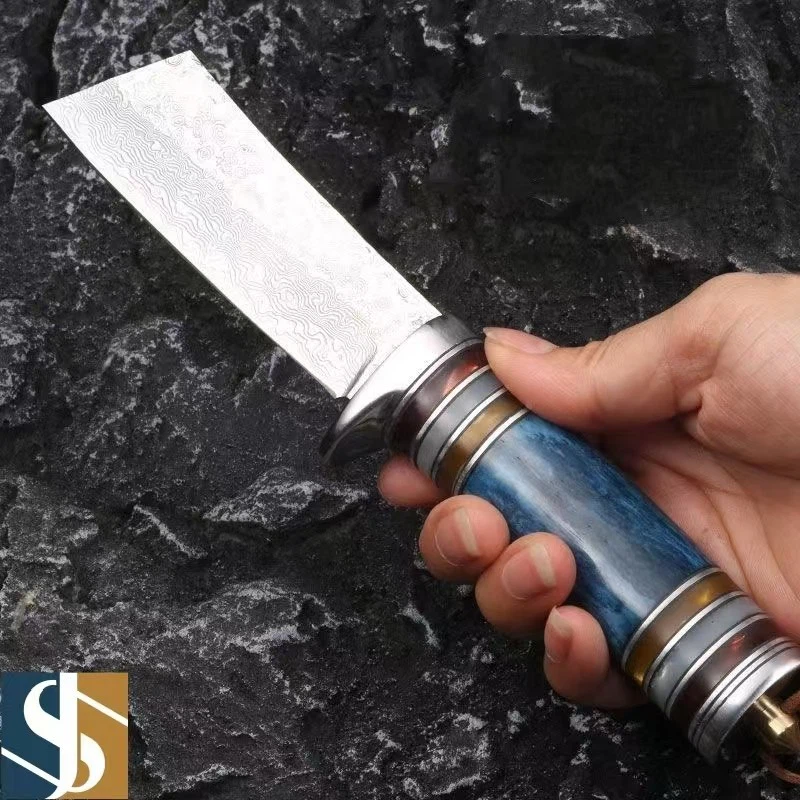
For instance, the Damascus Blade Cliff Cypress Wood Handle knife in our collection is a prime example of a high - quality knife. The Damascus steel blade not only has a beautiful pattern but also possesses outstanding cutting performance. The cliff cypress wood handle provides a comfortable and secure grip, making it a pleasure to use.
Cutting Mechanisms and Metal Wires
When it comes to cutting, the basic principle is to apply a force that exceeds the strength of the material being cut. For thin metal wires, they have a certain degree of tensile strength and ductility. Tensile strength refers to the maximum stress a material can withstand before breaking, while ductility allows the metal to deform under stress without immediate fracture.
A high - quality knife can potentially cut through thin metal wires under certain conditions. The sharp edge of the knife can concentrate the applied force on a small area of the wire. If the force is sufficient and the blade is sharp enough, it can sever the intermolecular bonds within the metal wire. However, this is not always straightforward.
Factors Affecting the Cutting Ability
Blade Hardness
The hardness of the blade is crucial. A harder blade is more likely to maintain its sharpness during the cutting process. If the blade is too soft, it may deform or become dull quickly when trying to cut through the metal wire. High - quality knives are designed to have an appropriate hardness level. For example, the Damascus Steel Tanto Knife has a well - balanced hardness that allows it to handle tough cutting tasks, including potentially cutting thin metal wires.
Blade Geometry
The shape of the blade also plays a significant role. A blade with a fine edge angle can provide better cutting efficiency. A tanto - style blade, like the one on the Damascus Bamboo Handle Tanto Knife, has a strong and pointed tip, which can be useful for piercing and starting the cut on the metal wire. However, the overall blade shape needs to be considered in combination with the cutting force and the nature of the wire.

Wire Material and Thickness
Different metals have different properties. For example, copper wires are more ductile than steel wires. A copper wire may stretch and deform more before breaking, making it more challenging to cut. Additionally, the thickness of the wire is a critical factor. Thinner wires generally require less force to cut through, but even thin wires can pose difficulties if they are made of high - strength metals.
Real - World Testing and Limitations
In real - world scenarios, while a high - quality knife can cut through some thin metal wires, it is not a universal solution. For very high - strength metal wires, such as those made of certain alloys used in aerospace or industrial applications, the knife may not be able to generate enough force to cut through.
Moreover, repeated cutting of metal wires can cause significant wear on the knife blade. Even the sharpest and hardest blades will gradually lose their edge over time. This is why it is important to use the knife appropriately and not subject it to tasks that are beyond its intended capabilities.
Conclusion
In conclusion, a high - quality knife can potentially be used to cut through thin metal wires, but it depends on multiple factors such as blade hardness, geometry, wire material, and thickness. Our high - quality knives, like the ones mentioned above, are designed to offer excellent cutting performance in a variety of situations.
If you are interested in our high - quality knives and would like to discuss potential purchases or have more questions about their capabilities, please feel free to contact us. We are always ready to provide you with detailed information and assist you in finding the perfect knife for your needs.
References
- "Knife Making: Techniques for Forging and Grinding Blades" by Jeff Moran
- "Materials Science and Engineering: An Introduction" by William D. Callister Jr. and David G. Rethwisch