


Are utility knives suitable for kids?
As a utility knife supplier, I often encounter questions from customers about the suitability of utility knives for kids. This is a topic that requires careful consideration, taking into account various factors such as safety, development, and the specific nature of utility knives.
Safety Concerns
The most obvious concern when it comes to kids using utility knives is safety. Utility knives are sharp tools designed for cutting a variety of materials, and they can cause serious injuries if not used properly. According to the American Academy of Pediatrics, children are at a higher risk of accidental injuries with sharp objects due to their lack of coordination and judgment.
Sharp blades can easily cut through skin, causing lacerations that may require stitches. In more severe cases, deep cuts can damage tendons, nerves, or blood vessels. Additionally, the small parts of a utility knife, such as the blade or the locking mechanism, can pose a choking hazard if swallowed by young children.

However, it's important to note that not all utility knives are the same. Some models are designed with safety features that can reduce the risk of injury. For example, retractable blades can be pushed back into the handle when not in use, minimizing the exposure of the sharp edge. Some utility knives also have a locking mechanism that keeps the blade in place during use, preventing it from accidentally retracting or extending.
Developmental Benefits
On the other hand, there are some potential developmental benefits to kids using utility knives under appropriate supervision. Learning to use a utility knife can help children develop fine motor skills, hand - eye coordination, and problem - solving abilities. When a child is taught how to hold a utility knife correctly and make precise cuts, they are exercising the small muscles in their hands and fingers.
For instance, in art and craft projects, a utility knife can be used to cut paper, cardboard, or foam. This allows children to create more detailed and complex designs, which can boost their creativity and self - confidence. In educational settings, utility knives can be used in science experiments or woodworking projects, helping kids understand the properties of different materials and how to manipulate them.
Age and Maturity Considerations
The suitability of utility knives for kids also depends on their age and maturity level. Young children, typically under the age of 8, are generally not ready to use utility knives independently. They may not have the physical strength, coordination, or judgment to handle these tools safely. At this age, it's best to provide them with safer alternatives, such as child - friendly scissors or blunt - edged craft knives.
As children get older, around 8 - 12 years old, they may start to show more interest in using tools and may have the physical and mental capabilities to learn how to use a utility knife under close supervision. Parents or teachers can provide step - by - step instructions on how to hold the knife, how to make a cut, and how to store the knife safely.
Teenagers, especially those in high school, may be more responsible and have the skills to use utility knives more independently. However, it's still important to remind them of safety precautions and to ensure that they are using the knife in a proper environment.
Types of Utility Knives
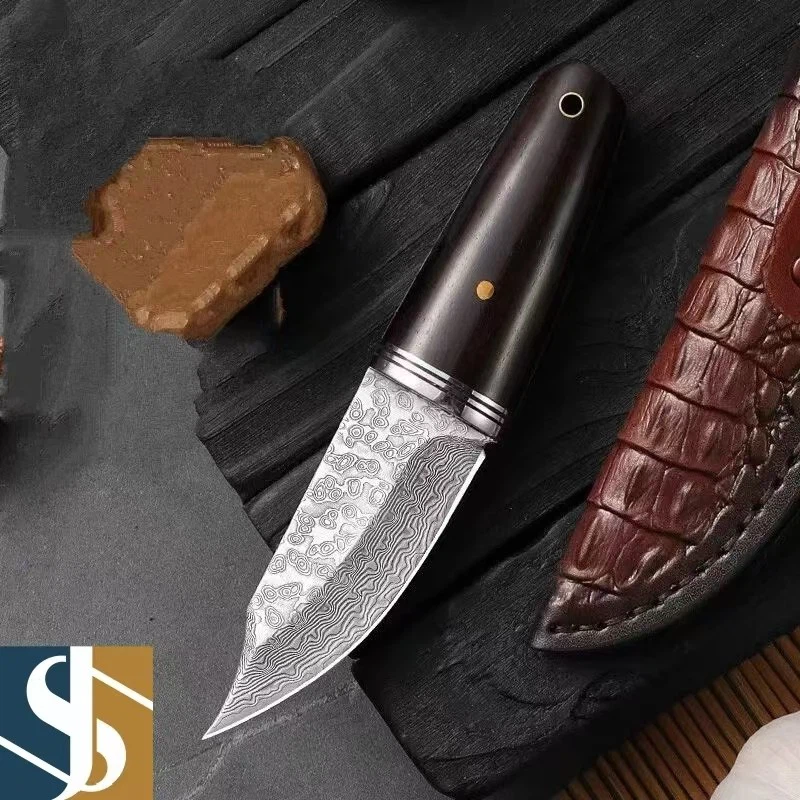
There are different types of utility knives available in the market, and some may be more suitable for kids than others. For example, Damascus Pocket Knife is a popular choice. It is relatively small and portable, making it easy to handle. The Damascus steel blade is sharp and durable, but it also requires careful handling.
Another option is the Damascus Point Knife. This type of knife has a pointed tip, which can be used for more precise cutting tasks. However, the pointed tip also increases the risk of injury, so it should be used with extra caution.
The Mini Damascus Tanto Knife is a smaller version of the tanto knife. It has a unique blade shape that is suitable for both slicing and piercing. While it can be a useful tool, its sharpness and design mean that it should only be used by older and more experienced kids.
Safety Training and Supervision
Regardless of the type of utility knife and the age of the child, proper safety training and supervision are essential. Before allowing a child to use a utility knife, they should be taught the following safety rules:
- Always hold the knife with a firm grip and keep your fingers away from the blade.
- Cut away from your body and other people.
- Never run or play with a utility knife.
- When not in use, retract the blade and store the knife in a safe place, out of reach of younger children.
- If the blade becomes dull or damaged, replace it immediately.
Supervision is also crucial. An adult should be present at all times when a child is using a utility knife, especially for younger children. The adult can provide guidance, correct any unsafe behavior, and respond quickly in case of an accident.
Conclusion
In conclusion, utility knives can be suitable for kids under certain conditions. While there are significant safety concerns, when used with appropriate safety measures, supervision, and at the right age, utility knives can offer valuable developmental benefits. As a utility knife supplier, I understand the importance of providing customers with information about the safe use of these tools.
If you are interested in purchasing utility knives for educational purposes, art projects, or other activities, I encourage you to contact me for more information. We offer a wide range of utility knives with different features and designs to meet your specific needs. Whether you are a parent, a teacher, or a school administrator, we can help you find the right utility knives for your situation.
References
- American Academy of Pediatrics. "Preventing Injuries in Children and Adolescents." Pediatrics, 2018.
- National Safety Council. "Safety Guidelines for Using Hand Tools." National Safety Council, 2020.