


When it comes to the world of knives, Damascus steel knives stand out with their alluring patterns and historical prestige. As a supplier of Damascus steel knives, I often encounter a question from customers and knife enthusiasts alike: Are Damascus steel knives good for cutting through bone? In this blog post, I'll delve into the aspects of Damascus steel and its performance in bone - cutting scenarios.
Understanding Damascus Steel
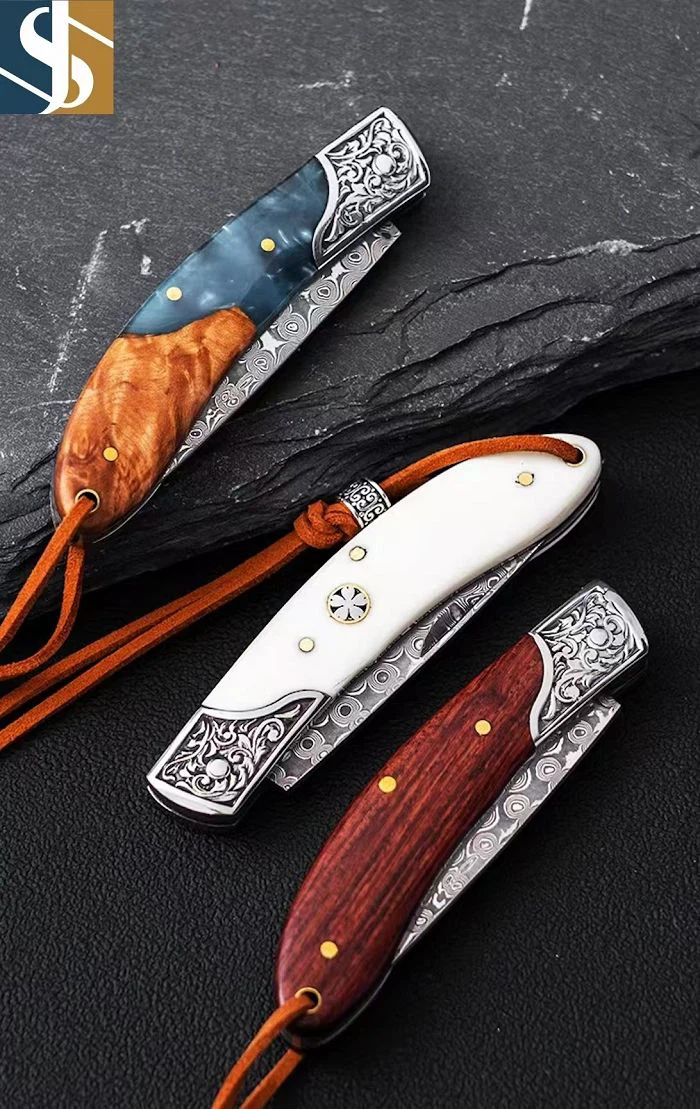
Damascus steel has a rich and storied history that dates back centuries. Originally, it was used to forge swords in the Middle East, renowned for their sharpness, strength, and distinctive wavy patterns. The modern Damascus steel we see today is typically made through a process of forge - welding different types of steel together. This layering technique not only creates the beautiful visual effect but also combines the best properties of various steels.
The layering in Damascus steel provides a unique structure. The different steels have varying hardness levels. Harder steels can hold an edge well, while softer steels offer toughness and resistance to chipping. This combination theoretically gives Damascus steel knives an advantage in both sharpness and durability.
Factors Affecting a Knife's Ability to Cut Bone
Before analyzing the suitability of Damascus steel knives for cutting bone, we need to understand the key factors that influence a knife's bone - cutting performance.
Blade Geometry
The shape of the blade is crucial. A blade with a thick spine and a strong, wide tip is generally better for bone cutting. A wide blade can distribute the force more evenly when striking the bone, reducing the risk of the blade getting stuck or breaking. A thick spine adds strength and stability to the blade, allowing it to withstand the impact of hitting bone.
Blade Hardness
Hardness is measured on the Rockwell scale (HRC). A harder blade can hold a sharper edge, which is beneficial for slicing through bone. However, if the blade is too hard, it becomes brittle and more prone to chipping or breaking when it encounters the hard, irregular structure of bone. A balance must be struck between hardness and toughness.
Edge Sharpness
A sharp edge is essential for efficient bone cutting. A well - sharpened blade can penetrate the bone more easily, reducing the amount of force required. Regular sharpening is necessary to maintain the edge, especially when dealing with tough materials like bone.
Damascus Steel Knives in Bone - Cutting Situations
Advantages
One of the main advantages of Damascus steel knives in bone - cutting is their combination of hardness and toughness. The layering process allows for a blade that can hold a sharp edge due to the presence of harder steels in the layers, while the softer steels provide the necessary flexibility to resist chipping.
The beautiful patterns on Damascus steel are not just for show. They can also indicate the quality of the blade's construction. A well - made Damascus steel knife with a consistent pattern is likely to have a uniform distribution of different steels, which can contribute to better overall performance.
Many Damascus steel knives are crafted with high - quality materials and expert craftsmanship. This attention to detail often results in blades with excellent blade geometry, which is favorable for bone cutting. For example, some of our Damascus Point Knife models have a strong, pointed tip and a wide blade that can effectively handle bone - cutting tasks.
Disadvantages
Despite their many advantages, Damascus steel knives also have some limitations when it comes to bone cutting. The complex forging process of Damascus steel can sometimes lead to inconsistencies in the blade's properties. If the layers are not properly bonded, there may be weak spots in the blade, which can increase the risk of breakage when cutting bone.

The cost of Damascus steel knives is generally higher compared to other types of knives. This means that using them for heavy - duty bone - cutting, which can cause wear and tear on the blade, may not be the most cost - effective option for some users.
Real - World Applications and User Experiences
In real - world scenarios, Damascus steel knives have been used for bone - cutting in various fields such as butchery and hunting. Butchers often require knives that can handle the task of cutting through the bones of different animals. Many butchers appreciate the sharpness and durability of Damascus steel knives. Our Damascus Bovine Bone Folding Knife is a popular choice among butchers due to its practical design and reliable performance.
Hunters also use Damascus steel knives for field - dressing game, which involves cutting through bones and tough tissues. The portability of some Damascus steel folding knives, like the Damascus Shell Handle Small Folding Knife, makes them convenient for hunters in the field.
However, some users have reported that after extended use for bone cutting, the edges of Damascus steel knives may require more frequent sharpening compared to some specialized bone - cutting knives. This is due to the fact that bone is a very hard and abrasive material that can quickly dull the blade.
Maintenance and Care for Damascus Steel Knives Used in Bone Cutting
If you choose to use a Damascus steel knife for bone cutting, proper maintenance is essential to ensure its longevity.
After each use, clean the knife thoroughly to remove any bone fragments, blood, or other debris. Use warm, soapy water and a soft brush to clean the blade, and dry it immediately to prevent rusting.
Sharpen the knife regularly using a high - quality sharpening stone or a professional sharpening service. A sharp edge not only improves the knife's performance but also reduces the stress on the blade during bone cutting.
Store the knife in a dry place, preferably in a sheath or a knife block to protect the blade from damage.
Conclusion
So, are Damascus steel knives good for cutting through bone? The answer is yes, with some caveats. Damascus steel knives offer a combination of sharpness, toughness, and aesthetic appeal that can make them suitable for bone - cutting tasks. Their historical reputation and unique properties make them a popular choice among many users.
However, they are not without limitations. The potential for inconsistencies in the blade, the higher cost, and the need for more frequent maintenance are factors that need to be considered.
If you are interested in purchasing high - quality Damascus steel knives for bone - cutting or other purposes, we are here to assist you. Our range of Damascus steel knives is crafted with precision and care, ensuring excellent performance. Whether you are a professional butcher, a hunter, or a knife enthusiast, we have the right knife for you. Contact us to start a procurement negotiation and find the perfect Damascus steel knife for your needs.
References
- "The Art of Knife Making" by Jake Hobson
- "Bladesmithing: Forging Your Own Knives" by John J. Peters
- Industry reports on knife performance and materials